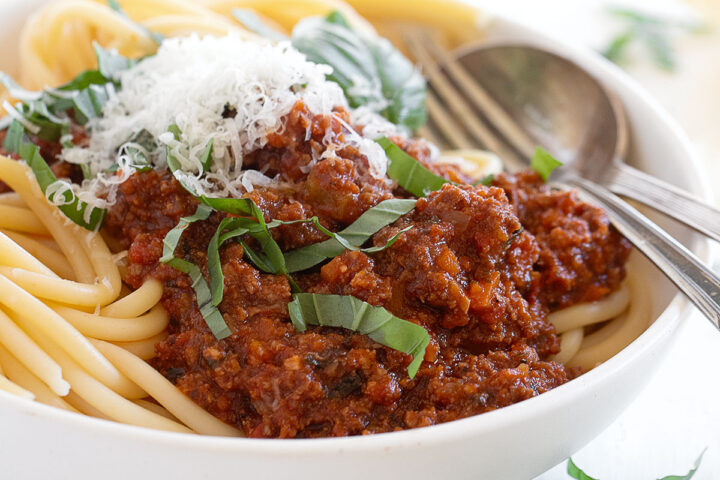
Get the Recipe: Classic Italian Meat Sauce
A classic Italian meat sauce recipe, made with ground beef, onion, carrots and celery, garlic, canned tomatoes, red wine and a long and low simmer. A perfect meat sauce to enjoy with pasta or to use in lasagna.
Ingredients
- 1 lb ground beef, lean or extra lean recommended, or a mix of ground beef, pork and or/veal
- 2 Tablespoons extra virgin olive oil, divided
- 1 cup onion, diced
- 1/2 cup carrot, finely diced
- 1/2 cup celery, finely diced
- pinch red pepper flakes, optional
- 4-5 cloves garlic, thinly sliced or minced
- 1/4 cup tomato paste
- 1 cup red wine, *see Note 1 below
- 28 oz whole canned tomatoes, hand-crushed
- 1/2 cup water
- 1/2 cup basil leaves, chopped, loosely packed or 2 Tbsp dried basil leaves
- 1 teaspoon dried oregano leaves
- 1-2 Tablespoons brown sugar, to taste
- 2 teaspoons fine table salt
To finish:
- 1 - 4 Tablespoons heavy whipping cream, optional *see Note 2 below
- 1 - 2 Tablespoons butter, optional *see Note 3 below
- additional salt and freshly ground pepper, to taste
Instructions
- In a large, heavy-bottomed pot, such as a Dutch oven, heat 1 Tablespoon of the olive oil over medium heat. (A heavy-bottomed pot, such as a Dutch oven, will prevent scorching during the long simmering time.) Add the ground beef and cook over medium heat, stirring as necessary, until no longer pink.
- Remove the pot from the heat briefly and, using an oven mitt, tilt the pan slightly. Move the beef to the top end of the pot to allow the fat in the pan to flow to the low end. Use a spoon to spoon off most of the fat/liquid in the pot and discard. Return the pot with the ground beef to the heat and continue cooking the ground beef a few more minutes, stirring, to brown nicely. Remove the ground beef to a bowl and set aside.
- Add the remaining 1 Tablespoon of olive oil to the same pot and heat over medium heat. Add the 1 cup onion (diced), 1/2 cup carrot (finely diced) and 1/2 cup celery (finely diced) to the pot and cook, stirring regularly, until the onion is softened, about 4-5 minutes. Add the pinch red pepper flakes (optional) (if using) and the 4-5 cloves garlic (thinly sliced or minced) and cook, stirring, about 1 minute (don't let the garlic scorch). Add the 1/4 cup tomato paste to the pot and cook, stirring, for another minute. Add the 1 cup red wine (*see Note 1 below), stir in, then allow to cook/simmer for about 2 minutes, or until reduced by about half. Add the 28 oz whole canned tomatoes (hand-crushed), 1/2 cup water, 1/2 cup basil leaves (chopped, loosely packed or 2 Tbsp dried basil leaves), 1 teaspoon dried oregano leaves, 1-2 Tablespoons brown sugar (to taste) and 2 teaspoons fine table salt. Stir well to combine, breaking up the whole tomatoes with the spoon. Return the cooked ground beef to the pot.
- Bring the sauce to a boil, then reduce the heat to low (or a tad higher if necessary to produce a very gentle simmer) and simmer the sauce for about 2 hours, stirring regularly and more frequently as the mixture starts to thicken toward the end of cooking. (It's important to watch the sauce closely and stir often as the sauce thickens, as the sauce/meat can scorch if it sits on the bottom of the pan too long.) Cook sauce until desired thickness is reached. For pasta, I like to leave it a touch thinner. For lasagna or other baked pasta, you can cook until most of the liquid has cooked off.
- Add the heavy cream (if using) a Tablespoon at a time and stir into the sauce until it reaches your desired level of creaminess. Add the butter to the sauce and stir vigorously with the sauce until the butter is completely melted. Taste the sauce and add additional salt and/or freshly ground pepper, as needed, to your taste. (If the flavours taste a little bit flat, a bit more salt is usually the solution!)
- To serve this meat sauce with pasta, I like to combine the sauce and the cooked pasta in a large bowl and toss well, then I use tongs to transfer to serving plates or a bowl. You can add another spoonful of sauce on top if you like.
- Use sauce immediately or cool a bit, then refrigerate for up to 3 days or freeze for up to 3 months.
If desired, you can blend the sauce ever so slightly with 2 or 3 blitzes with an immersion blender at the end of cooking to blend the onion/carrots into the sauce. This is not necessary, just personal preference if you prefer a chunky or smooth sauce. It's also helpful to hide the vegetables from picky kids :)
Notes
Note 1: For the best meat sauce, use a medium-bodied red wine with high acidity and moderate tannins, such as a Chianti, Sangiovese, or Barbera. Cabernet Sauvignon or Merlot would also work well. Opt for a wine you enjoy drinking, so you'll enjoy the flavour in this meat sauce.
If you don't have or want to use red wine, add a Tablespoon or two of red wine vinegar to deglaze the pan instead of the wine, then immediately add an extra cup of water to the sauce to replace the liquid from the wine. Allow the water to reduce by half just like the wine.
Note 2: Adding a bit of heavy cream to the meat sauce at the end of cooking works to soften the acidity of the tomatoes and wine and brings a richness to the sauce. It binds the fats and liquids together, creating a velvety mouthfeel that coats the noodles perfectly.
Note 3: The addition of butter to the finished meat sauce helps to emulsify the sauce so it will cling well to the pasta. Meat sauces are naturally low in fat. Adding a knob of cold butter (often called mantecatura in Italian cooking) and stirring it vigorously off the heat binds the fat and sauce together. This creates a glossy, thick coating that wraps around the spaghetti rather than sliding off.
Tips!
If you opt to forgo the cream and butter, consider stirring a splash of starchy pasta cooking water into the hot sauce, which will help to emulsify the sauce without the addition of additional fat.
Be sure to read the notes above this Recipe Card, where I share more detailed tips, variations and substitution suggestions for this recipe!
Serving: 1serving, Calories: 264kcal, Carbohydrates: 11g, Protein: 11g, Fat: 17g, Saturated Fat: 6g, Polyunsaturated Fat: 1g, Monounsaturated Fat: 8g, Trans Fat: 1g, Cholesterol: 46mg, Sodium: 852mg, Potassium: 550mg, Fiber: 2g, Sugar: 6g, Vitamin A: 1762IU, Vitamin C: 14mg, Calcium: 69mg, Iron: 3mg
Tried this recipe?If you enjoyed this recipe, please leave a star rating and comment. It helps others to find it!
