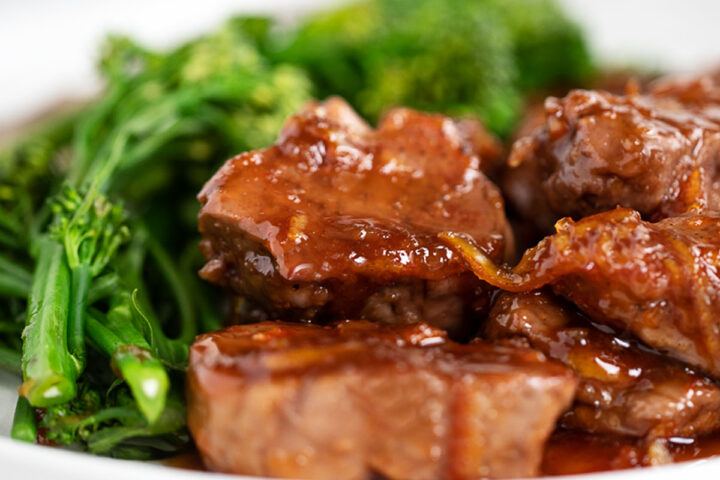
Get the Recipe: Ginger Orange Pork Medallions
Quick cooking orange pork medallions with a ginger, garlic and orange sauce. Orange marmalade makes a quick and flavourful sauce.
Ingredients
- 1 1/4 pounds pork tenderloin, cut into 1-inch pieces and patted dry
- 1-2 Tablespoons olive or vegetable oil, for the pan
- 2/3 cup orange marmalade
- 1 Tablespoon fresh ginger, grated or ginger paste
- 1 Tablespoon fresh garlic, minced
- 2 Tablespoons fish sauce, or soy sauce
- 3 Tablespoons fresh lime juice, from about 1 lime
Instructions
- Just lightly season the pork with salt and pepper and don't add any additional salt during cooking. The fish sauce will add salt. Taste at the end and add a bit more, if you think it needs it.
- Make the sauce by stirring together the marmalade, ginger, garlic, fish sauce and lime juice. Set aside.
- Prepare the pork tenderloin by removing the silver skin along the side and removing any visible fat. Cut into 1-inch-thick slices, then press down a bit with the palm of you hand to flatten a bit. Pat dry, then season lightly with a bit of salt and pepper.
- Heat oil in a large skillet over medium-high heat. (*A cast iron or stainless steel skillet is perfect for this. Non-stick skillets aren't generally recommended for higher heat cooking). Place pork medallions in skillet and cook until nicely browned underneath. Flip and broth the other side. *Don't rush this step. Browned pork tenderloins not only look nicer, but the browning will add flavour to the sauce, as well. Remove to a plate.
- Lower heat under skillet to medium. Add the sauce and stir a bit to stir in any browned bits on the bottom of the pan. Allow the sauce to simmer vigorously, stirring regularly, until it is thickened and syrupy, 2-3 minutes. Return the pork to the pan and toss in and cook with the sauce, until the pork is well coated and re-warmed.
Notes
To dress up this dish, before cooking the pork, heat some oil in a skillet, cut some fresh ginger into inch-long, julienne strips and shallow fry until golden. Remove to paper towel to cool. Use as a garnish for the finished dish.
Tips!
Browned equals flavour! Take the time to really brown the pork medallions well and be sure you are cooking at medium-high heat. Not only will they look nicer (no one likes pale pork), but the browned bits on the bottom of the pan will bring great flavour to the sauce.
A cast iron or stainless steel skillet is perfect for browning meat, as it takes the higher heat well and leaves a nice coating of browned bits. A non-stick skillet isn't the best choice for higher-heat browning, as they are not usually recommended for high-heat cooking (plus they don't make much in the way of those great browned bits).
Finally, the secret to cooking pork medallions so they are tender is simply not to overcook them. The smaller, thinner pieces will take much less time to cook through than a larger chop or tenderloin. That's why we brown them first, quickly, over higher heat, then remove them from the heat. When they are added back to the pan at the end, they need only a short time to reheat and finish cooking.
Be sure to read the notes above this recipe card for more tips, substitution suggestions and step-by-step photos that you might find useful.
Serving: 1serving, Calories: 343kcal, Carbohydrates: 38g, Protein: 30g, Fat: 9g, Saturated Fat: 2g, Polyunsaturated Fat: 1g, Monounsaturated Fat: 4g, Trans Fat: 0.1g, Cholesterol: 92mg, Sodium: 811mg, Potassium: 631mg, Fiber: 0.5g, Sugar: 33g, Vitamin A: 43IU, Vitamin C: 7mg, Calcium: 38mg, Iron: 2mg
Tried this recipe?If you enjoyed this recipe, please leave a star rating and comment. It helps others to find it!
