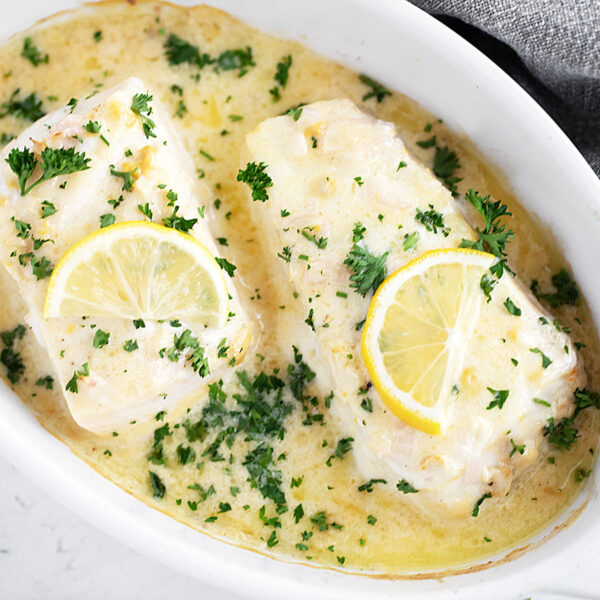
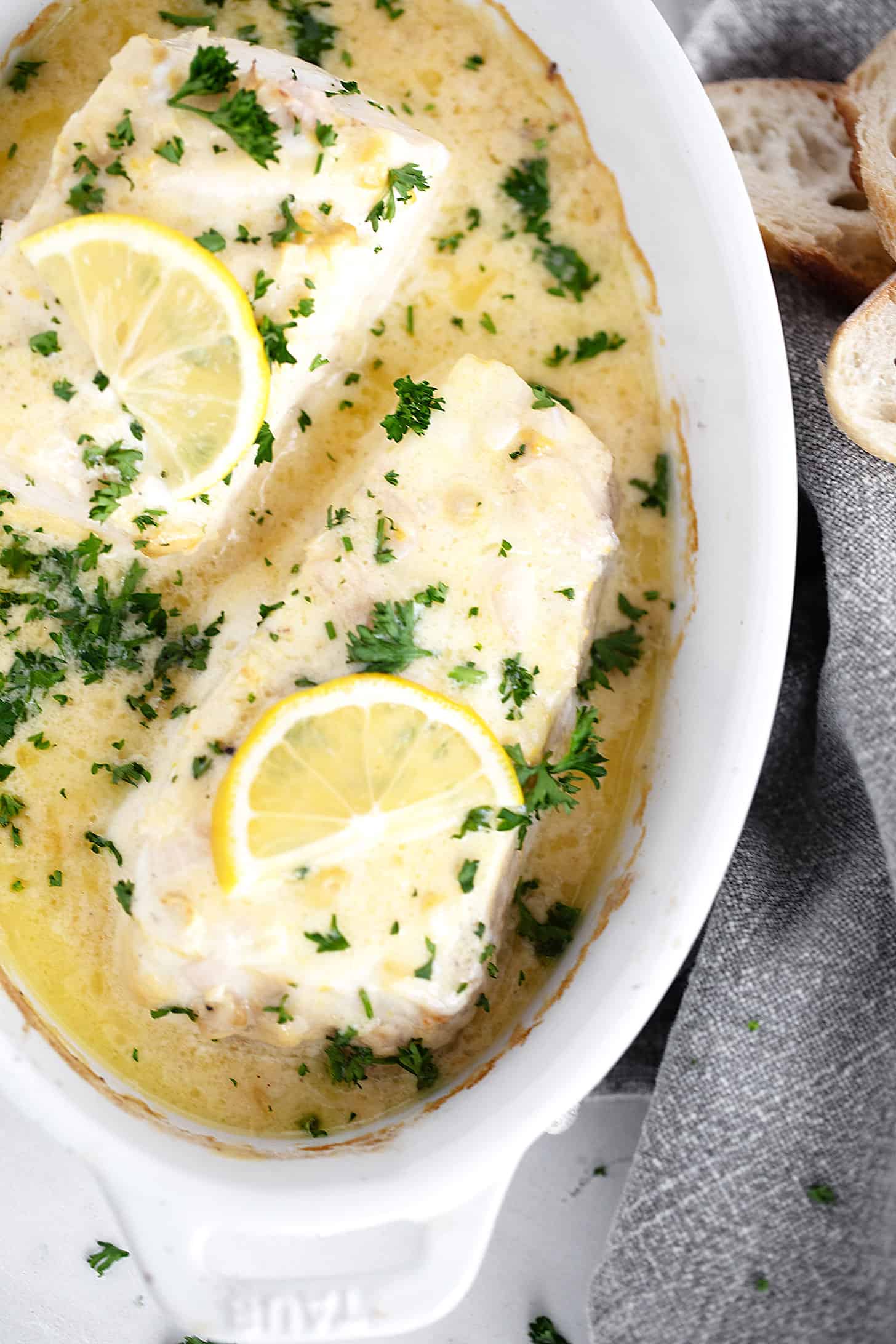
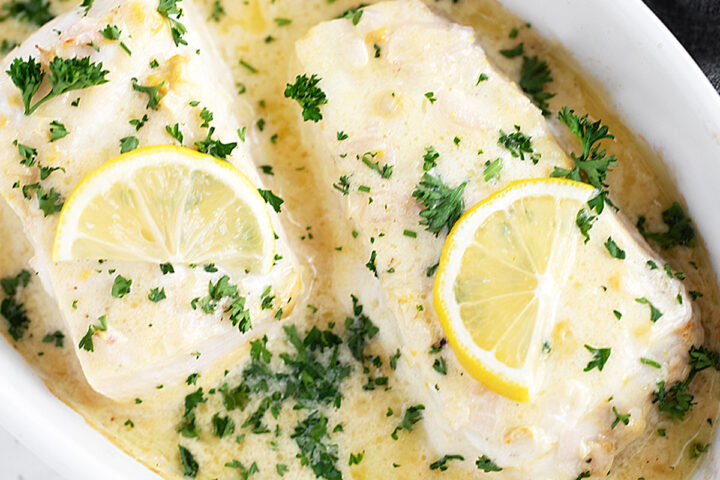
One of the nicest ways to enjoy beautiful halibut is also one of the easiest! This creamy lemon baked halibut is ready in just minutes but is absolutely restaurant-worthy! The flavourful sauce of lemon, butter, garlic and Dijon perfectly complements the halibut for a special, but easy fish dinner.
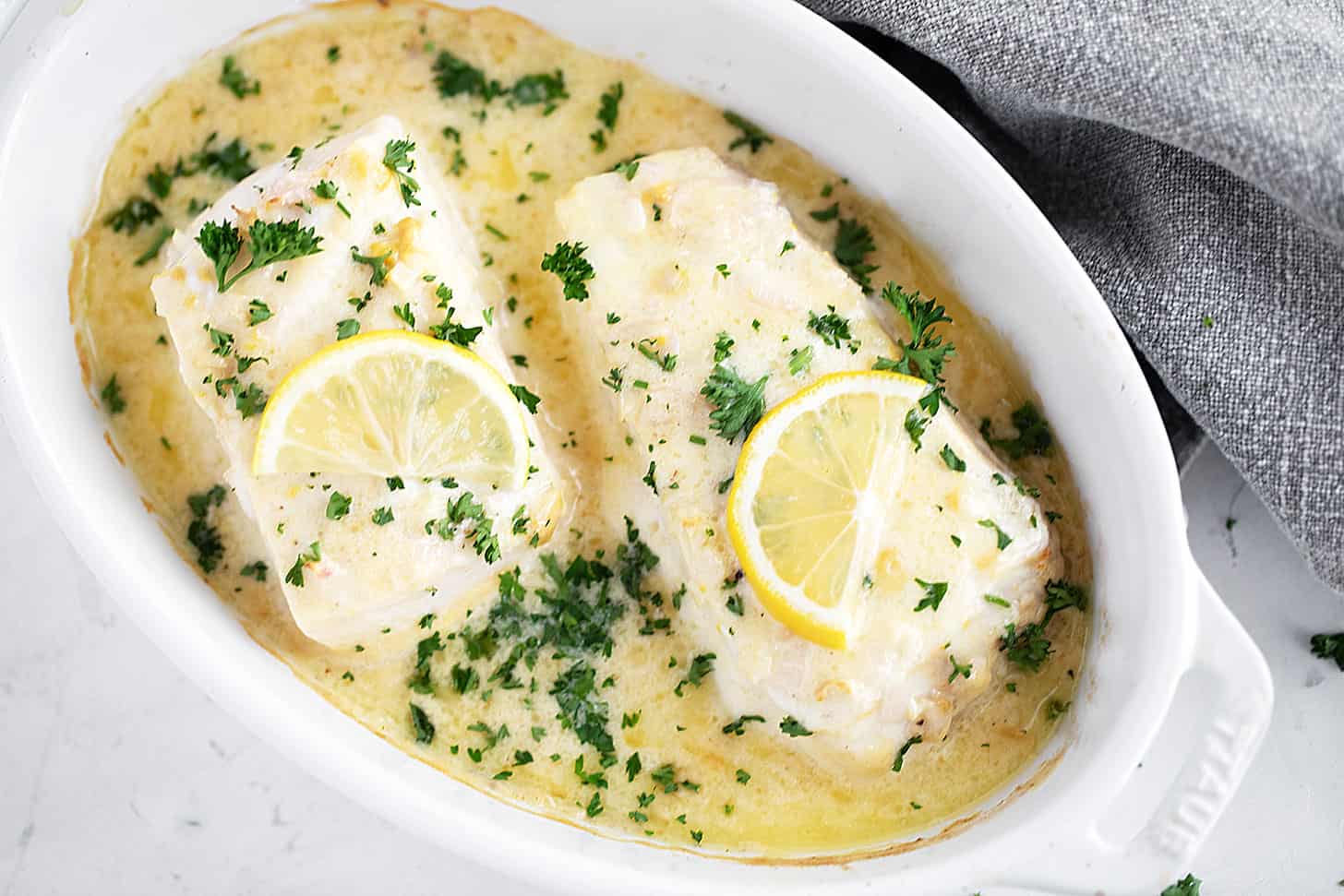
Halibut is such a lovely fish! It’s mild in flavour, with thick and firm fillets that are perfect for oven-baking. Here, halibut combines with shallots, cream, butter, lemon juice and mustard for an irresistible sauce that is simply poured over the fish and baked. Yes, it really is that easy!
While this 20-minute fish dinner is incredibly easy, the results are restaurant-worthy! It is also naturally gluten-free!
Ingredients and substitutions
A few notes about the key ingredients …
Halibut – Lovely, thick halibut fillets are recommended, but if halibut isn’t available, look for thick cod, tilapia or snapper fillets that are at least 3/4-inch thick.
Cream – Heavy whipping cream will provide the most luscious sauce. The high fat content will also prevent the sauce from splitting in combination with the lemon juice. You can substitute a lighter cream, though the sauce will be thinner and may split when combined with the acidic lemon juice. Canned, full-fat evaporated milk is another lower-fat option that is less likely to split than light cream.
Shallots – If shallots aren’t available, substitute a regular onion.
Lemon – Freshly-squeezed lemon juice will always bring the freshest flavour.
Dijon mustard – Use smooth Dijon mustard here.
Parsley – A touch of green really finishes off this dish nicely, so parsley is the obvious choice. I’ve snuck a wee bit of tarragon in myself, as I love the flavour and it pairs well with this dish.
How to make creamy lemon halibut
This is a visual summary of the steps to make this recipe. Always refer to the complete instructions in the Recipe Card below when making the recipe.
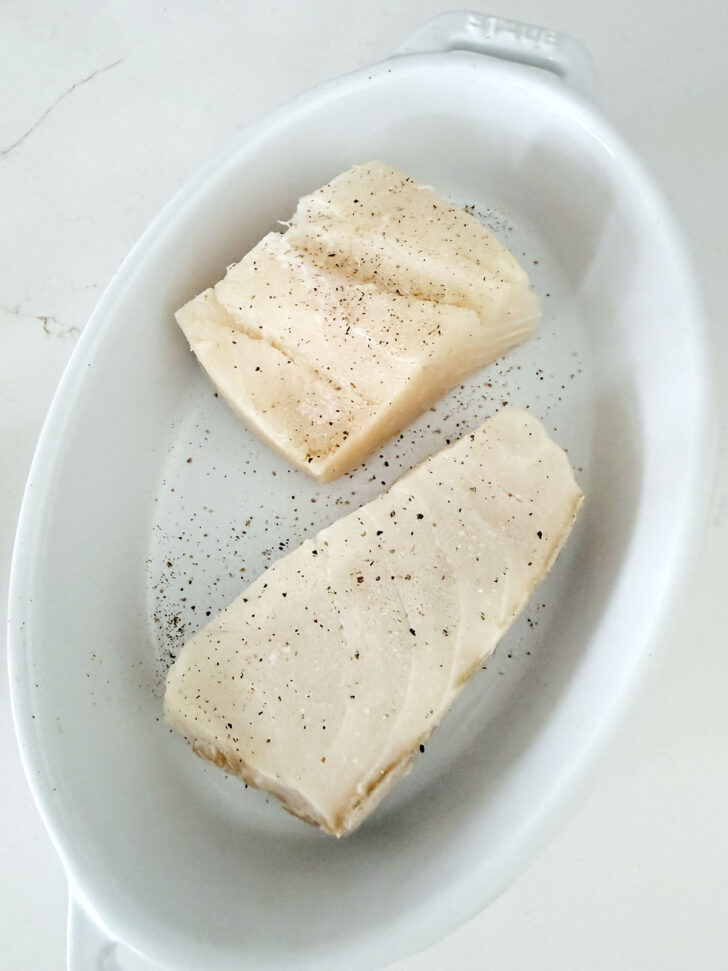
- Place the halibut fillets in a baking dish just large enough to have a bit of space around the fish.
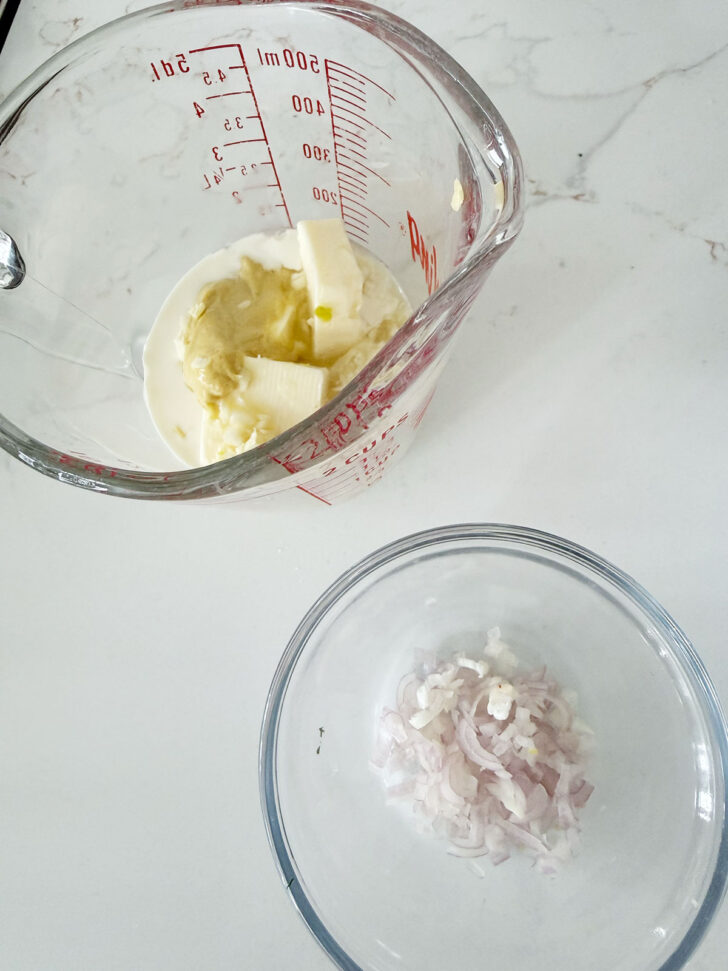
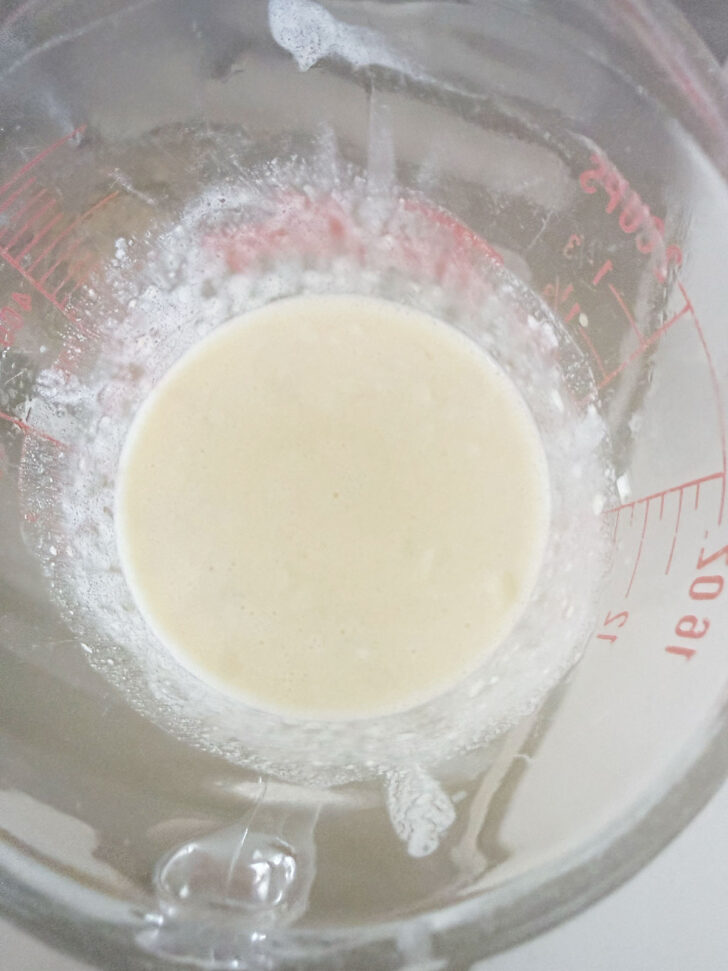
- Cut the shallots and have ready, then add the creamy lemon sauce ingredients to a microwaveable bowl or measuring cup.
- Heat the sauce ingredients in the microwave (or in a saucepan) and stir to combine well.
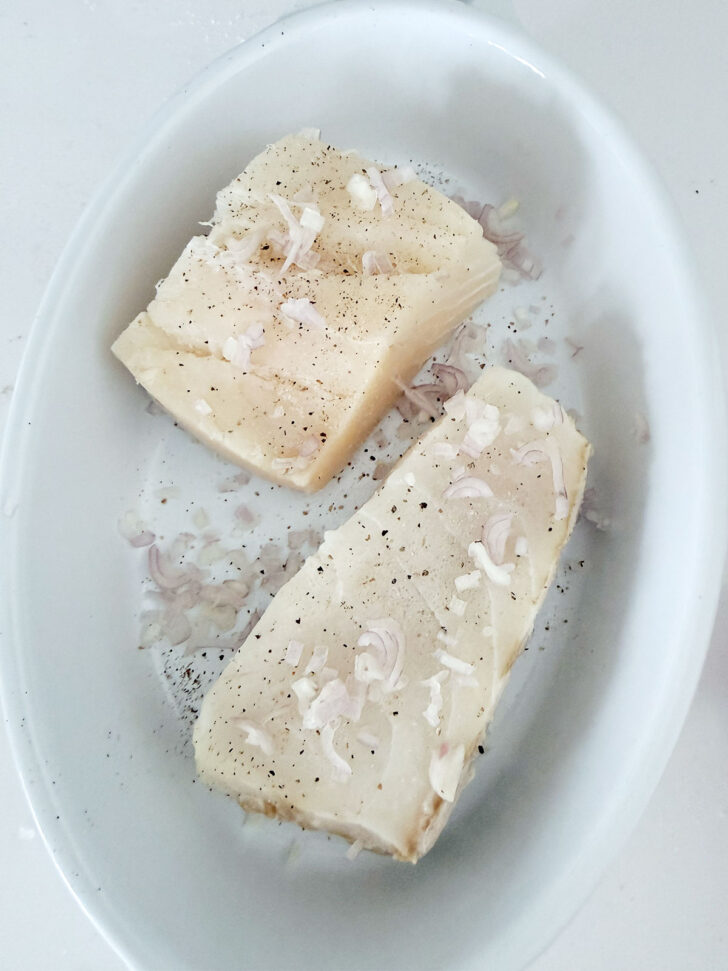
- Season the fish with salt and pepper and scatter the shallots over the fish.
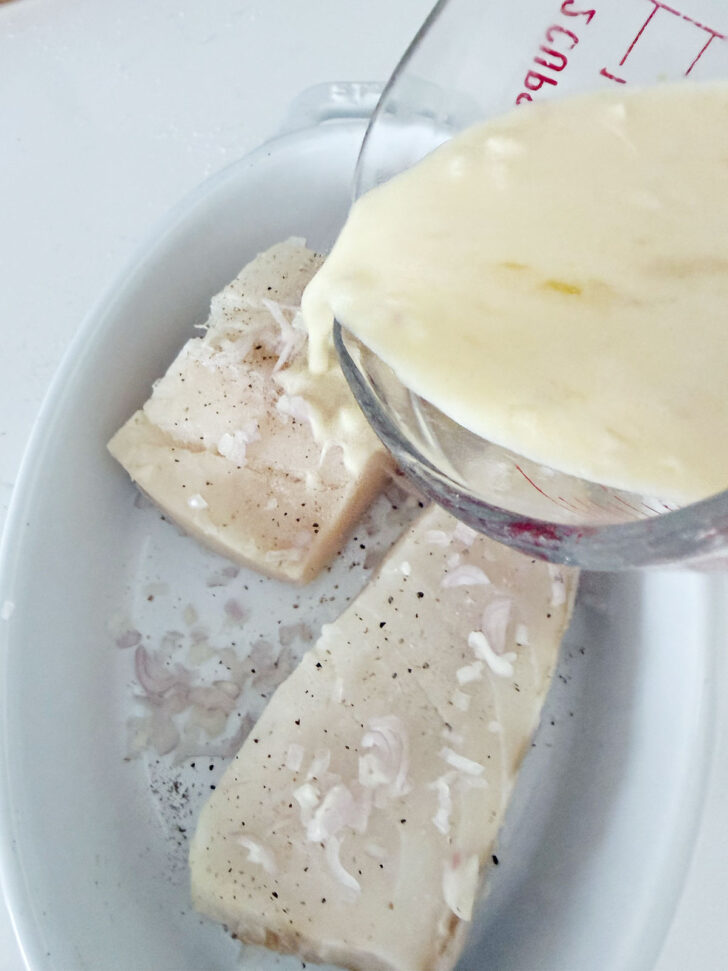
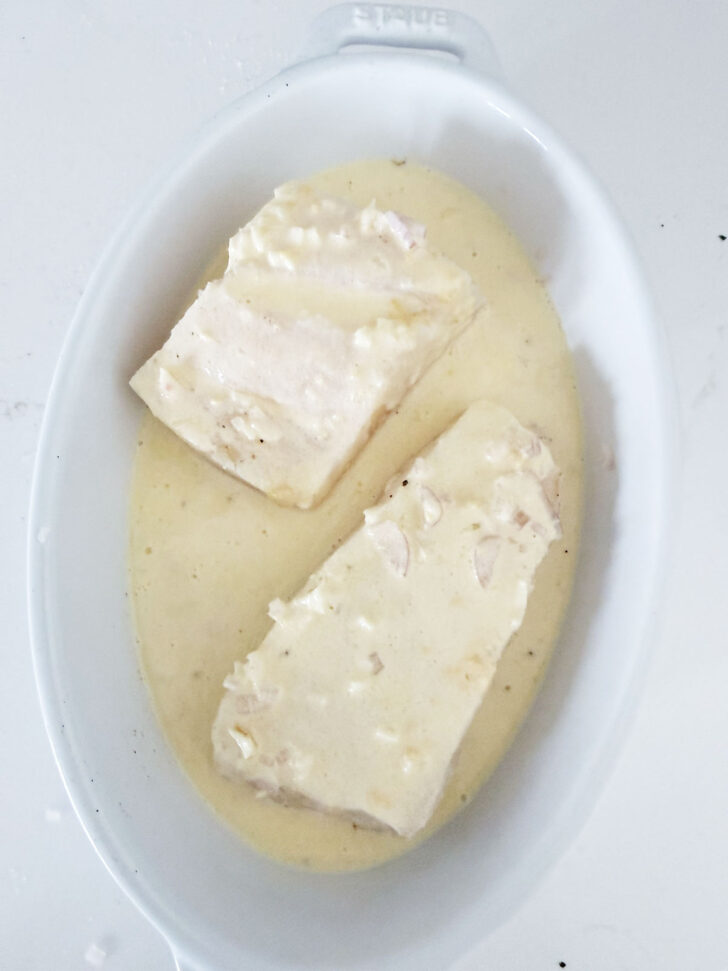
- Pour the creamy lemon sauce over the halibut.
- Place the fish into the oven and bake until tender and cooked through, 10-20 minutes, depending on the thickness of the fish. Fish is done when the flesh is opaque, and it separates/flakes easily when pulled with a fork. If you have an instant-read thermometer, it should register 145F when done.
Recipe tips!
- While the sauce for this fish will thicken as it bakes, it will not be really thick when done. Certainly not gravy-like, but a pleasant consistency that is appropriate for fish.
- This recipe is adaptable to other fish options, but avoid thin and tender fish fillets such as sole. Salmon and trout won’t fare well as they are too fatty and will make a poor quality sauce.
- Oven time will vary depending on the thickness of the fish. A good rule of thumb is 10 minutes per inch of height in a 400F oven or until the internal temperature reaches 145F.
- If you love creamy sauces, try my Coconut Milk Fish next!
Serving suggestions
This fish is perfectly served with a green vegetable such as green beans, broccoli or broccolini. My Broccoli Caesar Salad would also be a great side. If you’re looking for a starch to add, I feel like rice would be the best option.
Variations
If you’re looking to change it up a bit, consider adding a bit of fresh dill or tarragon to the sauce. Scattering a few capers into the baking dish before baking would also be a flavourful addition.
Want to save this recipe?
Enter your email and I’ll send it to your inbox. Plus, you’ll get great new recipes from me every week!
By submitting this form, you consent to receive emails from Seasons and Suppers.
You can unsubscribe at any time.
Get the Recipe: Creamy Lemon Baked Halibut
Ingredients
- 8-12 oz thick halibut fillets, fresh or thawed frozen, two 4-6oz fillets
- salt and freshly ground pepper
- 2 Tablespoons shallot, peeled and finely diced (or onion)
For the sauce:
- 1/4 cup butter, unsalted recommended
- 1/4 cup heavy whipping cream, 35% b.f. *see Note 1 below
- 2 cloves garlic, minced
- 1 Tablespoon Dijon mustard
- 1 1/2 Tablespoons lemon juice, freshly-squeezed recommended
- salt and freshly ground pepper, as needed, use less if using salted butter
To serve:
- parsley, finely chopped
- fresh lemon slices, cut in half-moon
Instructions
- Preheat oven to 400F (non-convection/not fan-assisted).
- Tip! If using thawed frozen fish, thaw completely, then pat dry really well with a paper towel to remove any excess moisture.
- Pat the halibut fillets dry and season with a bit of salt and pepper. Place into a baking dish that is not too large, but allows the fish to have a bit of room between the fillets. Scatter the shallots over the fish and into the baking dish. Set aside.
- Add the sauce ingredients to a microwaveable bowl or a small saucepan on the stovetop. Microwave the sauce for 30 seconds, stir, then microwave about 15 seconds more or until the butter is melted and the sauce is smooth. (For the stovetop, heat over medium heat, stirring, until the butter is melted and the sauce is smooth.)
- Pour the sauce over the top of the fish, allowing it to spill over into the baking dish. (The sauce will be thin at this point, but it will thicken a bit as it cooks with the fish.) Place into the preheated oven and cook until cooked through, 10-20 minutes, depending on the thickness of the fish (count on about 10 minutes for every inch of thickness). The fish should register 145F internal temperature when tested with an instant-read thermometer, or look for the fish to be opaque, and it should flake easily with a fork. The finished sauce should have thickened, but it won't ever be super thick or gravy-like. It is a perfect consistency for spooning over the fish. See the Recipe Tips if you'd like a bit thicker sauce.
- To serve, sprinkle with parsley and place a half-moon lemon slice on top of the fish, if you like. Finish with a bit more salt and pepper, to taste.
Notes
Adapted from a Recipe Tin Eats recipe
More fish recipes to love!



Hi! I’m Jennifer, a home cook schooled by trial and error and almost 40 years of getting dinner on the table! I love to share my favourite recipes, both old and new, together with lots of tips and tricks to hopefully help make your home cooking enjoyable, stress free, rewarding and of course, delicious!