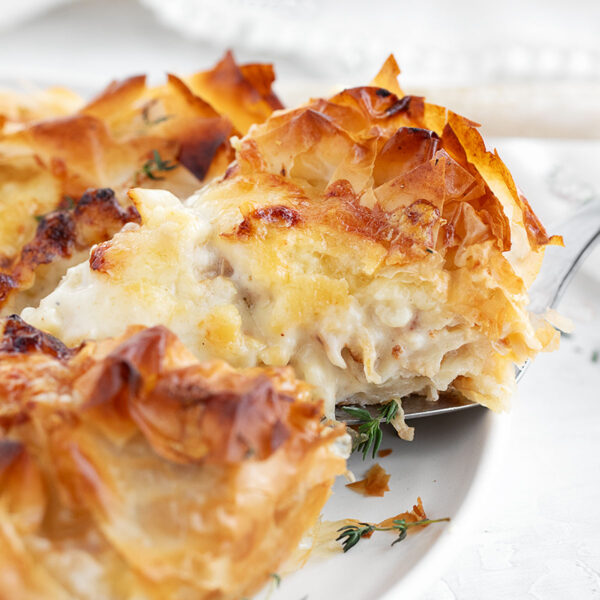
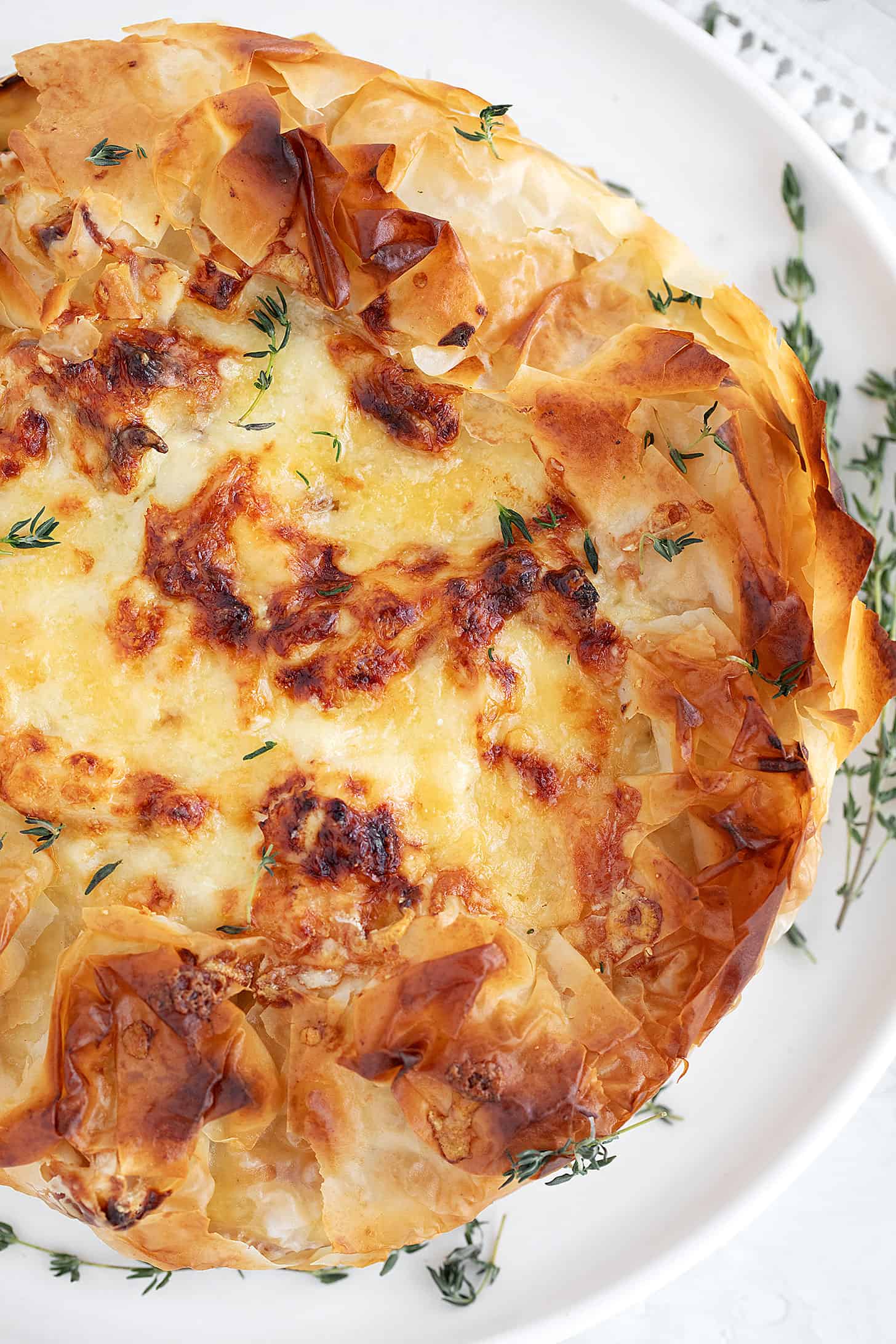
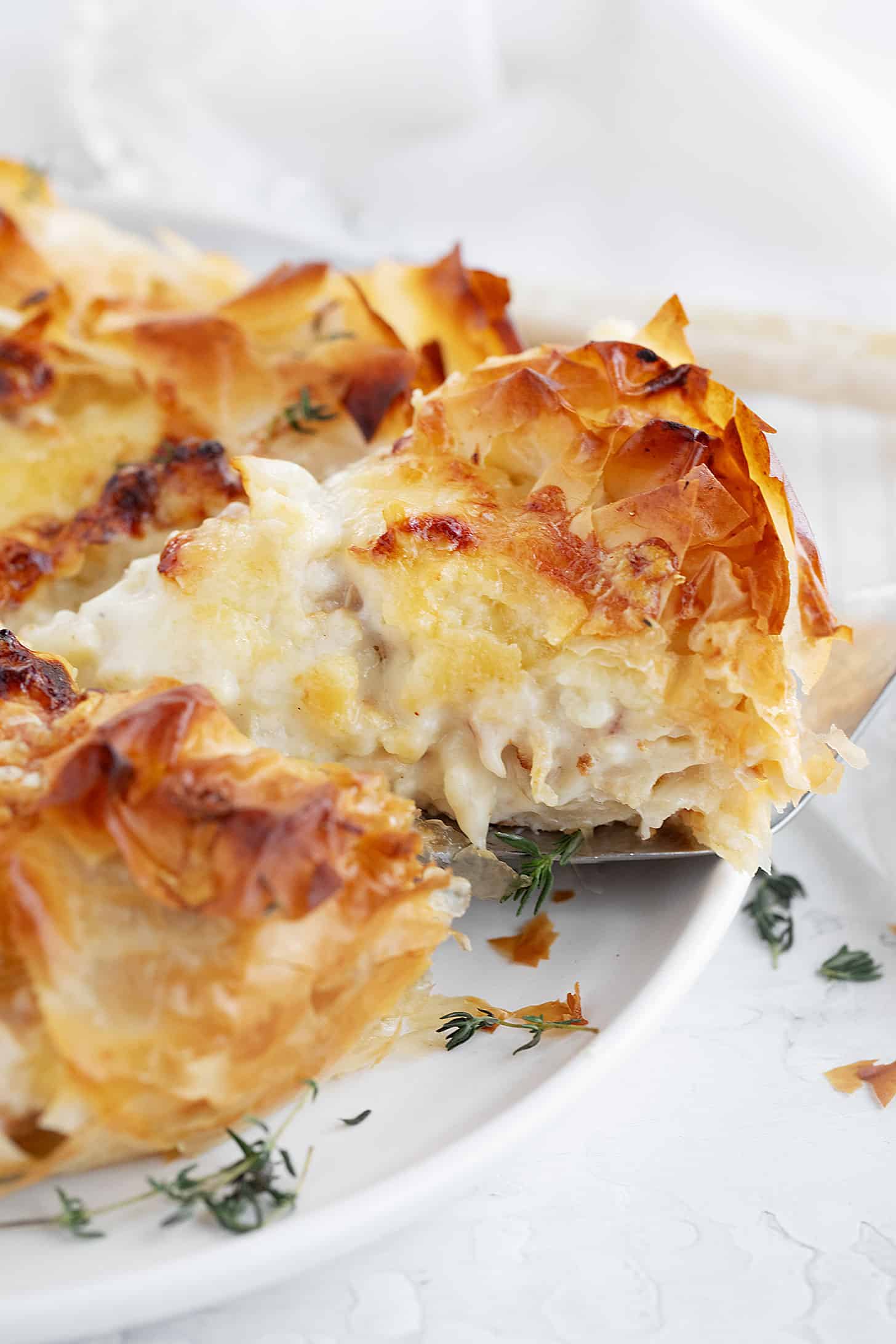
This impressive and delicious cauliflower and cheese phyllo pie is also easy to make. It delivers the wow-factor with just a little extra effort, which is so worth it!
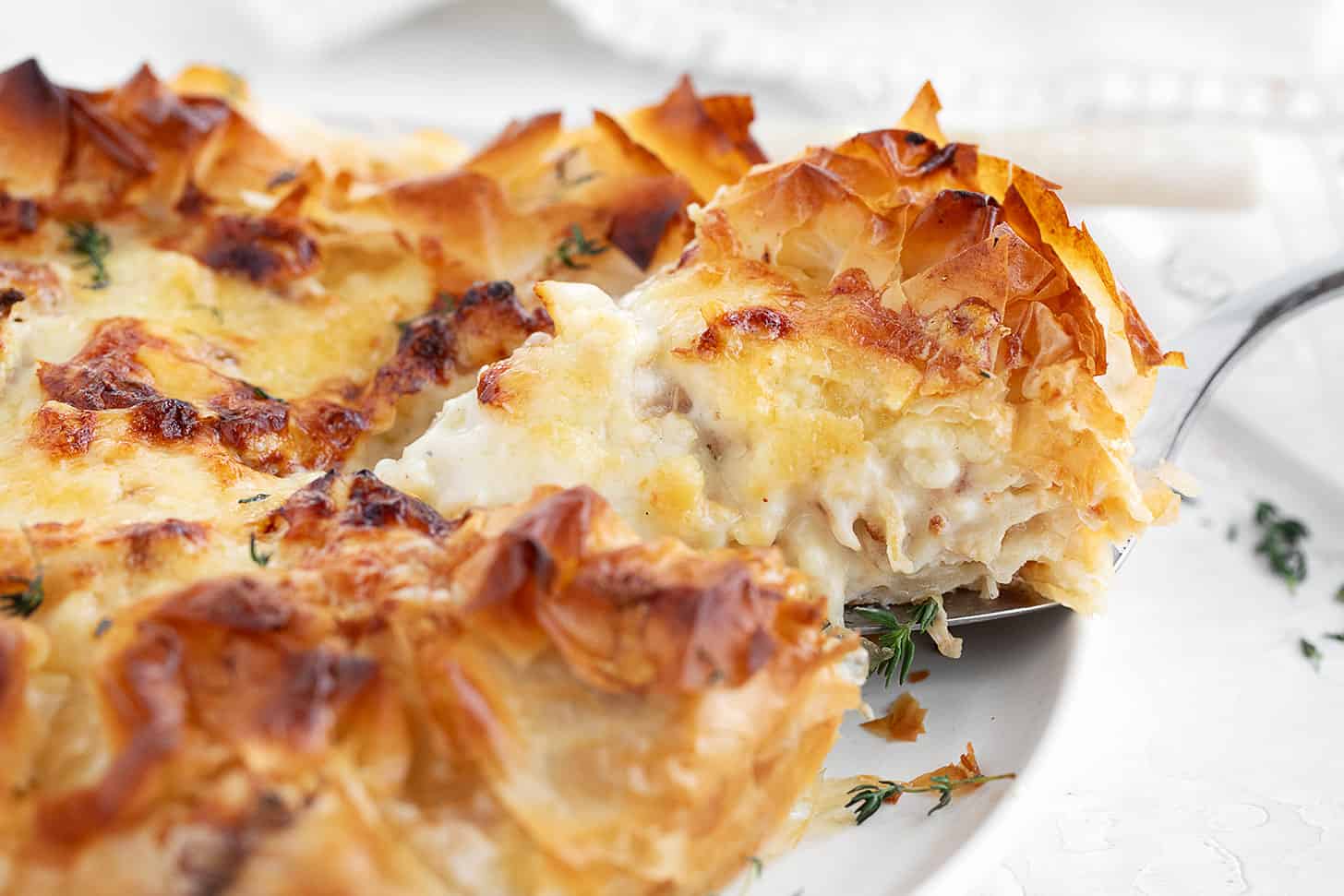
Beyond all the deliciousness is the unique use of all of the cauliflower, including the core and leaves! In case you’re wondering, it tastes like cabbage when cooked.
Ingredients and substitutions
A few notes about the key ingredients …
Cauliflower – Pick up a large cauliflower and roast it off, You may not need quite all of it in the pie, but any extra can be refrigerated and used for another meal.
Cheese – Opt for a mature, aged white cheddar for the best flavour. A 2 or 3-year-old white cheddar is a good choice, or look for the smaller squares of British mature white cheddar (Catherdral, Coastal etc.)
Phyllo – Look for phyllo dough with the frozen puff pastry. Thaw the box of phyllo pastry overnight in the refrigerator, then take it out of the fridge about 1 hour before ready to use. Leave the package unopened until ready to use.
You can re-freeze the unused phyllo sheets. Be sure to keep them covered and moist while out of the fridge and re-wrap immediately and well before returning to the freezer.
How to make cauliflower and cheese phyllo pie
This is a visual summary of the steps to make this recipe. Always refer to the complete instructions in the recipe card below when making the recipe.
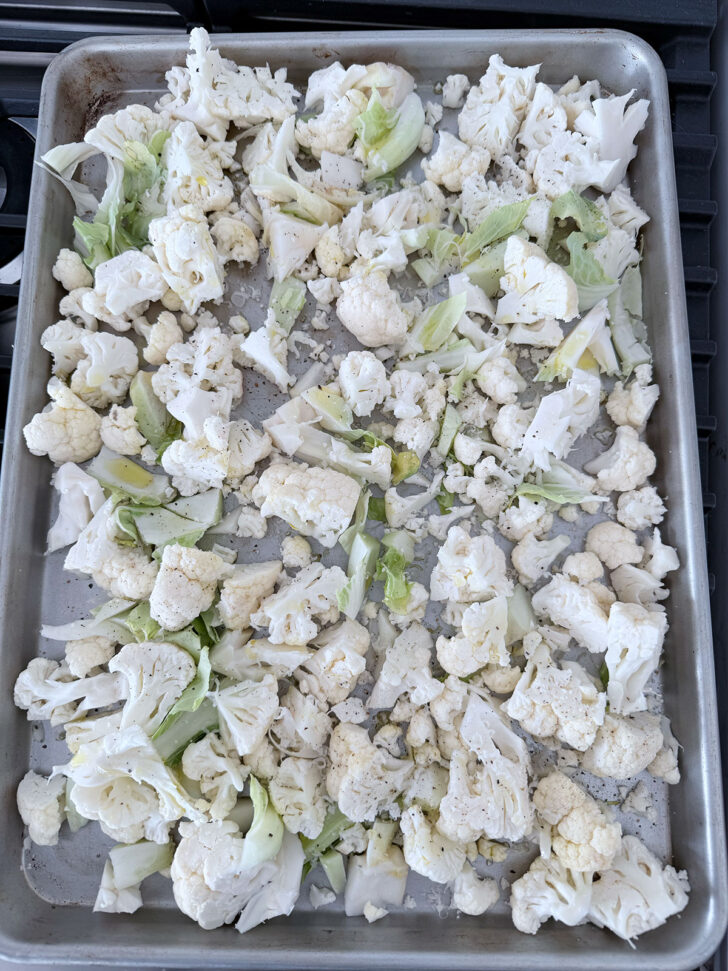
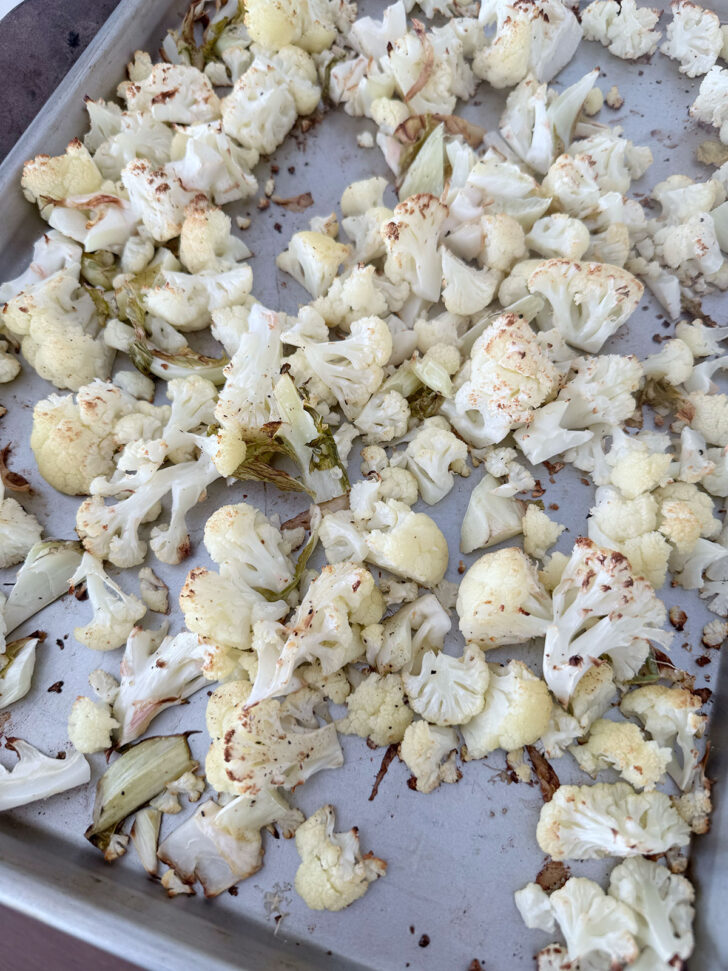
- Start by chopping up the cauliflower, including the core and leaves. Scatter evenly over a large baking sheet and drizzle with olive oil. Grate some Parmesan overtop, then season with a bit of salt and pepper. Place in the oven to roast for about 30 minutes.
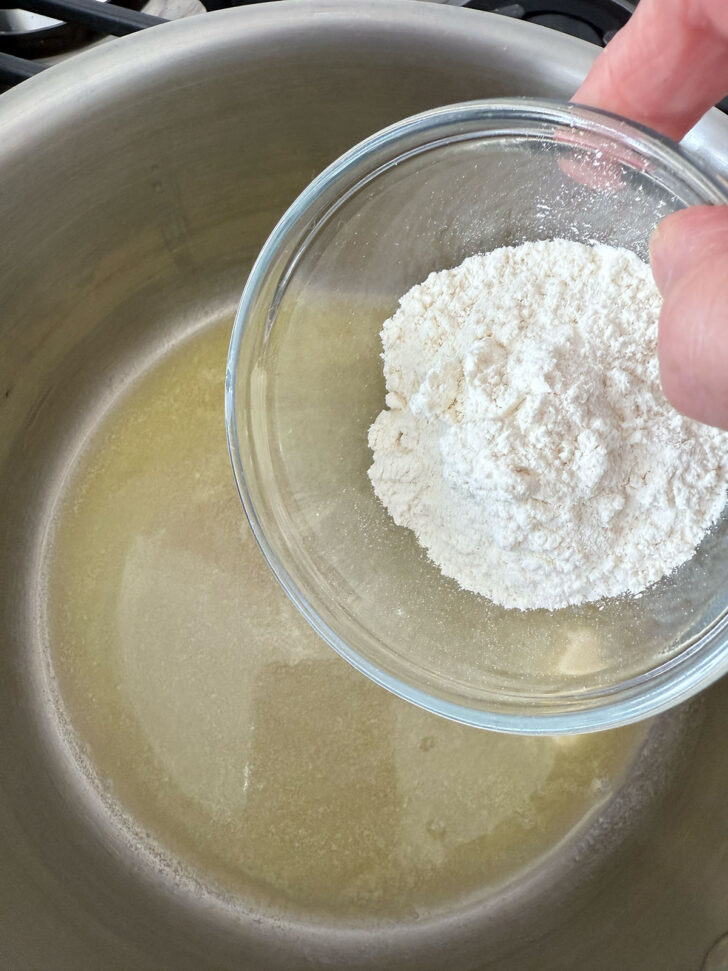
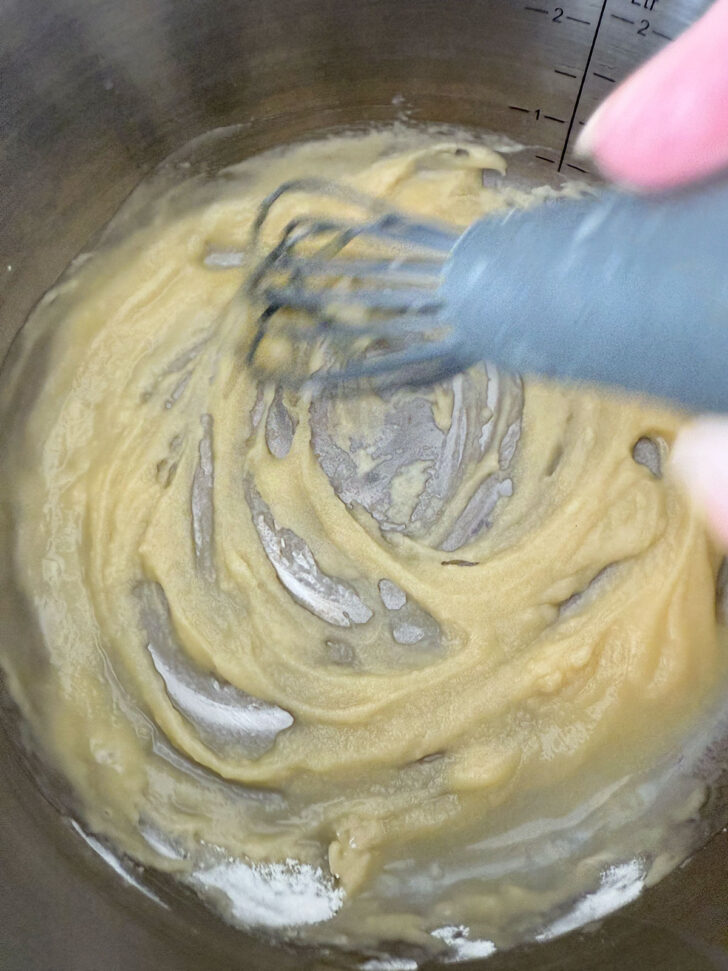
- Meanwhile, start the cheese sauce by melting the butter, then add the flour.
- Whisk the butter and flour together and cook for about 2 minutes.
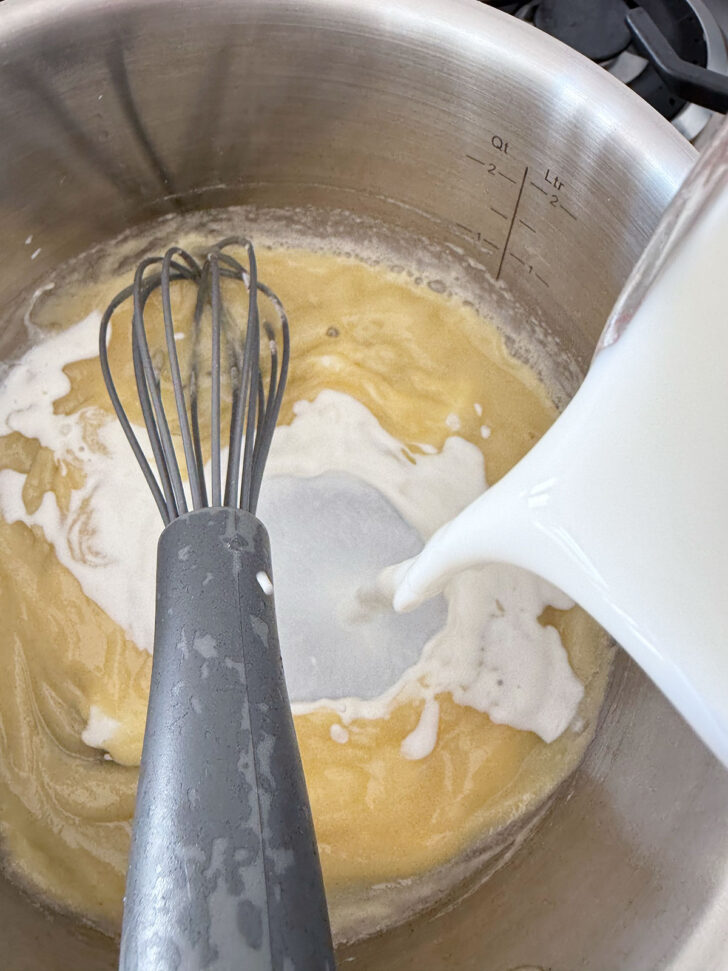
- Gradually add the milk and whisk in well. Cook the sauce, stirring regularly for 8-10 minutes, or until thickened.
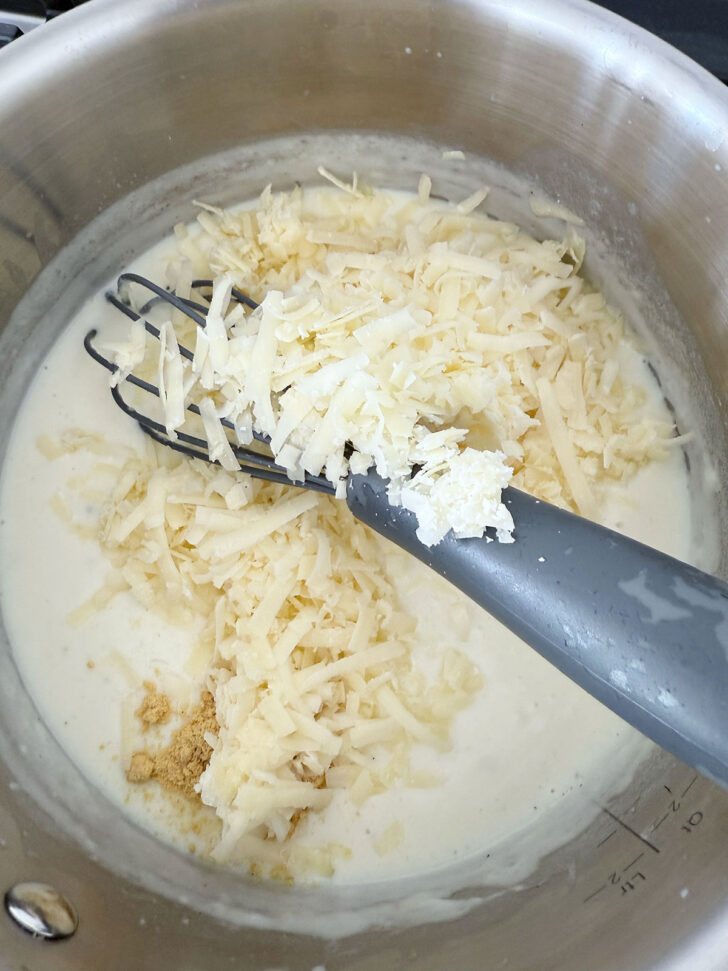
- Add the dry mustard and shredded cheese and whisk into a smooth sauce.
- Remove the cauliflower from the oven and allow it to cool a bit.
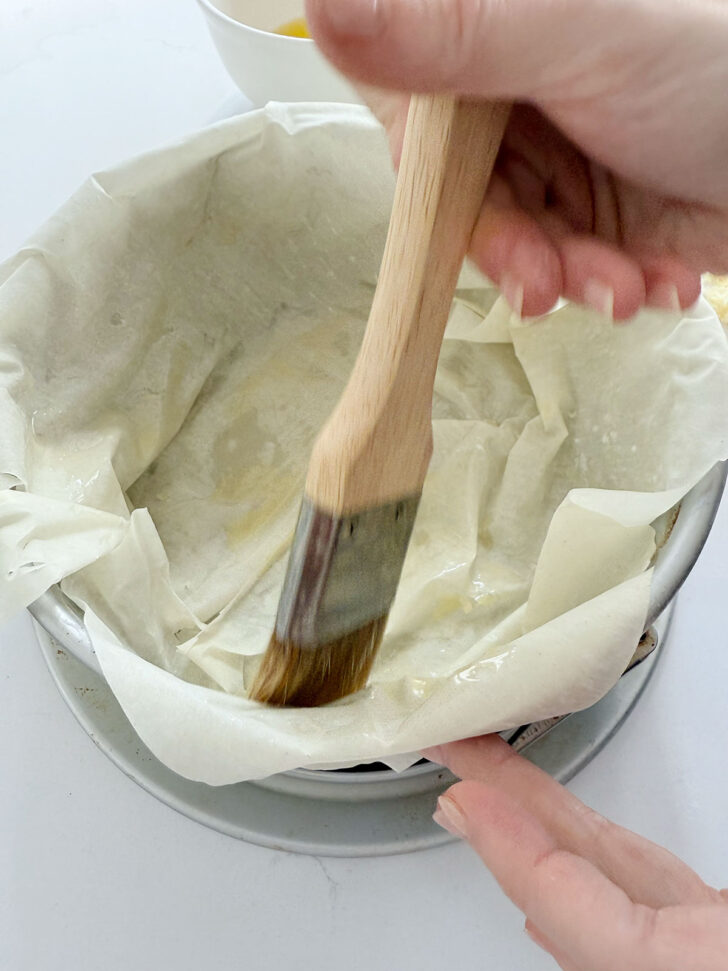
- Start assembling the pie by layering in the phyllo sheets, brushing generously with butter between layers.
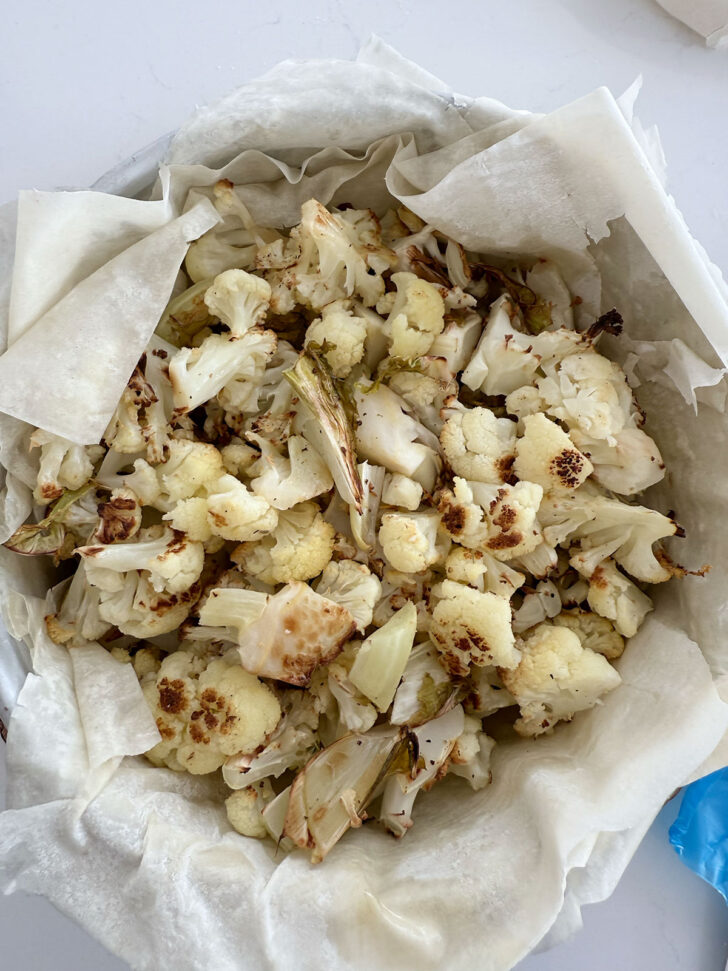
- Spoon the roasted cauliflower into the pan, filling up to the top. You may not need all your cauliflower if you started with a large one.
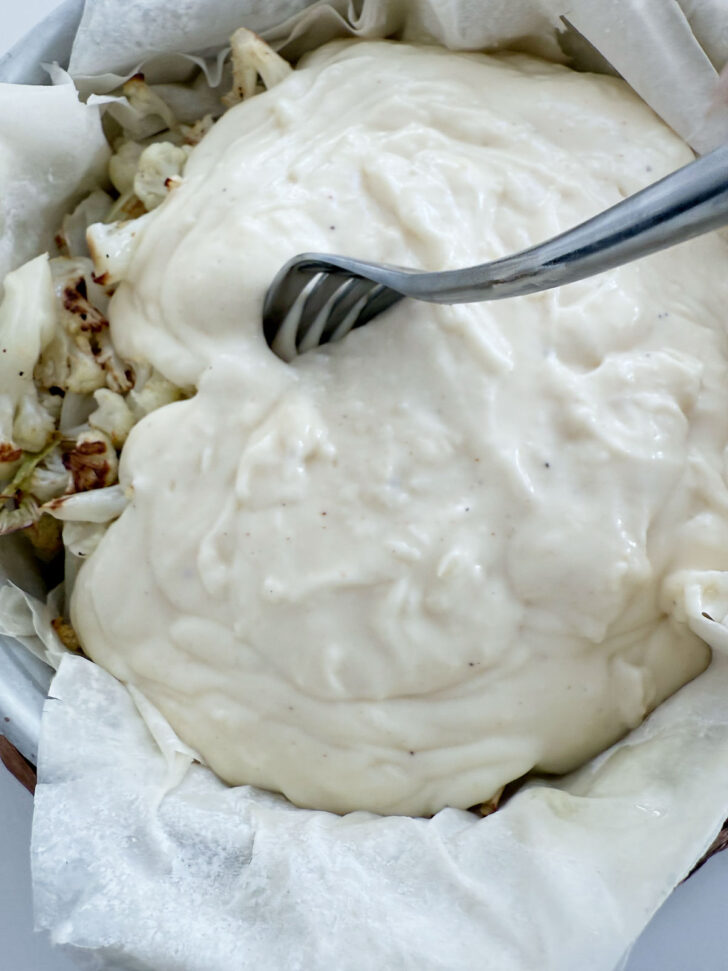
- Pour the cheese sauce overtop of the cauliflower and use a fork to move combine it with the cauliflower a bit.
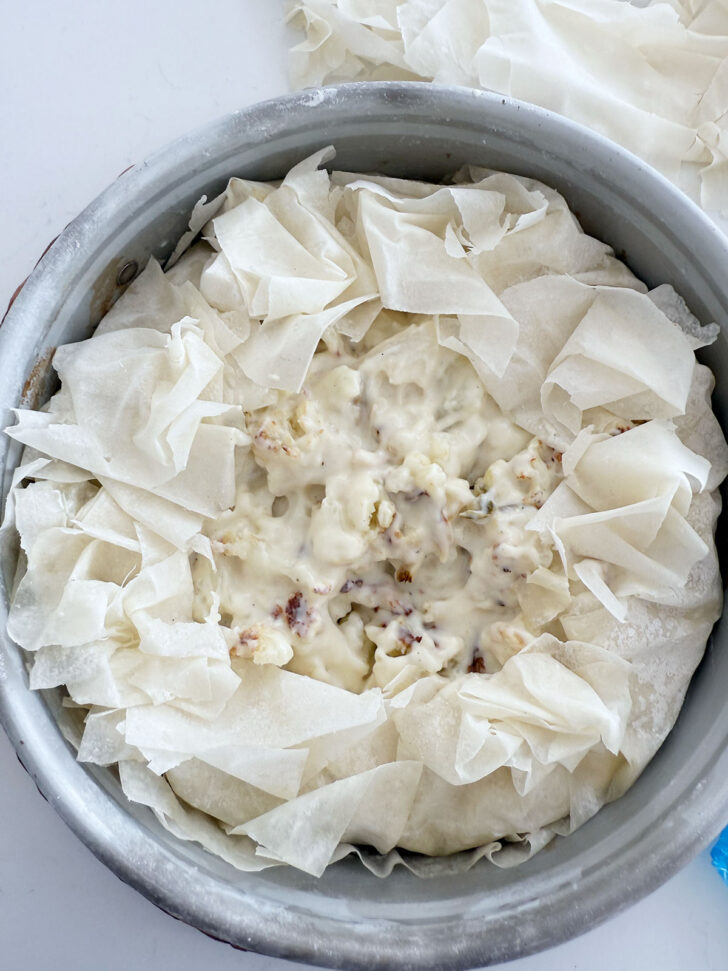
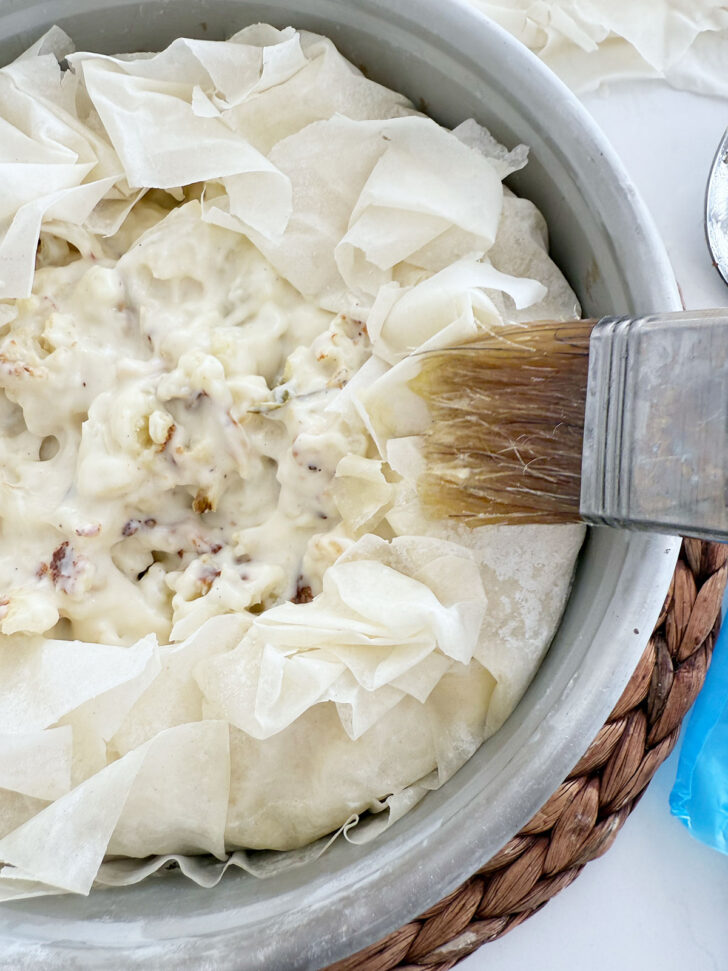
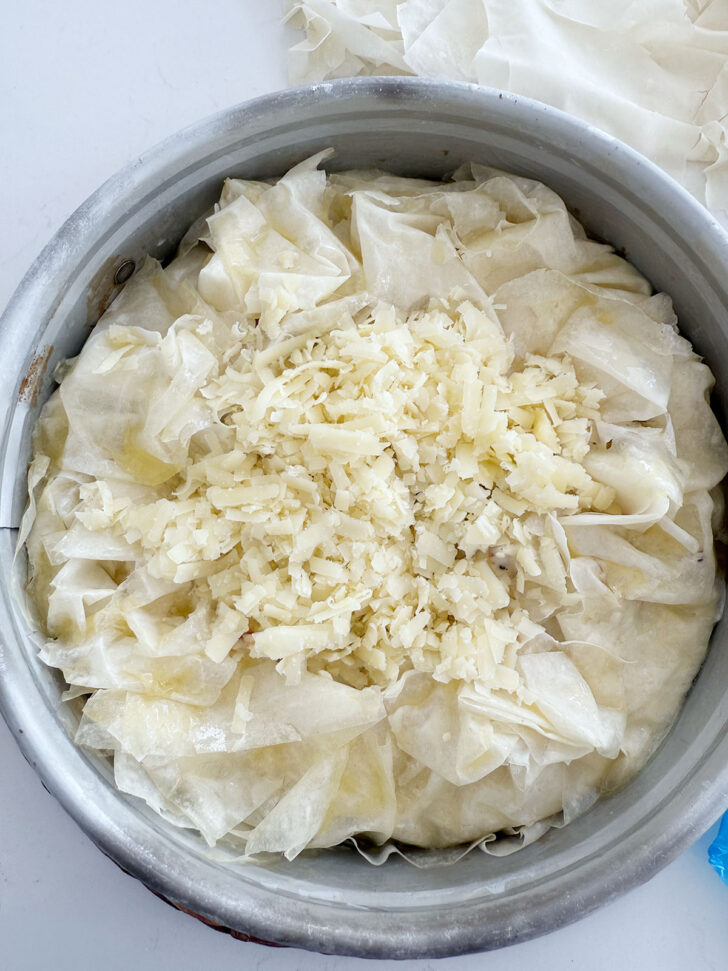
- Take the excess phyllo dough and fold it over the top of the pie, scrunching up the edges into a ruffle.
- Brush the top generously with butter.
- Scatter the remaining shredded cheddar into the centre of the pie before baking.
Recipe tips!
- Don’t stress over the phyllo. It may tear or rip, and that’s ok. It’s very forgiving, and it will all be good in the end. Just be sure not to leave any gaps along the sides or bottom of the pan that might allow the filling to seep out. Patching it up a bit is perfectly fine :)
- Speaking of phyllo, the paper-thin sheets dry out really quickly. Don’t open the package until you are ready to assemble the pie. Keep the remaining sheets covered with a barely-damp tea towel.
- Use a generous hand when brushing the phyllo with butter, as it is the fat that will make the golden, crisp phyllo crust.
- Be sure to place the springform pan on a baking sheet, as it may leak a little butter as it cooks.
Making ahead and storing
If you are looking for options to make this phyllo pie ahead, there are a couple of options. You can roast the cauliflower ahead and make the cheese sauce ahead. Refrigerate both, but bring to room temperature before adding to the pie. Cold fillings will extend the baking time and may over-cook the phyllo.
Once the pie is baked, it is best enjoyed within 2 hours. Store at room temperature and gently re-warm in a 350F oven loosely covered with aluminum foil to avoid over-browning the phyllo.
Store leftovers in the refrigerator for up to 2 days, but note that the phyllo will soften as it sits. You can refresh it a bit by re-warming in the oven as detailed above.
Want to save this recipe?
Enter your email and I’ll send it to your inbox. Plus, you’ll get great new recipes from me every week!
By submitting this form, you consent to receive emails from Seasons and Suppers.
You can unsubscribe at any time.
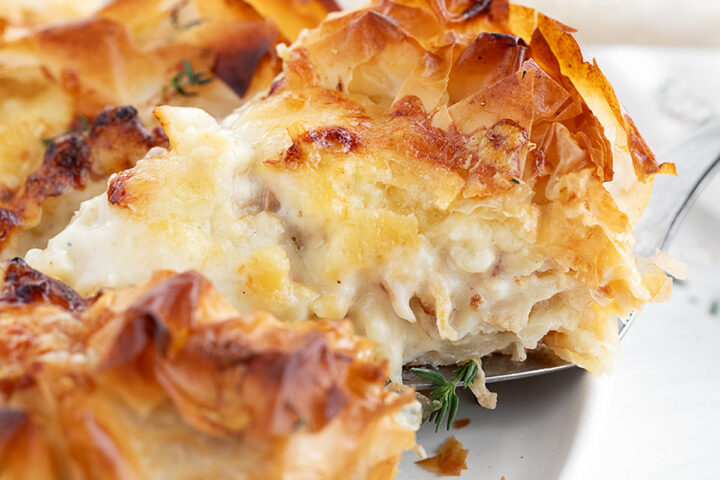
Get the Recipe: Cauliflower and Cheese Phyllo Pie
Ingredients
For the cauliflower:
- 1 large head of cauliflower
- 2 Tablespoons olive oil
- Salt and freshly ground pepper
- 2-3 Tablespoons parmesan cheese
For the cheese sauce:
- 1/4 cup butter
- 1/4 cup all-purpose flour
- 1 cup half and half cream (10% butterfat)
- 1 cup 2% milk, *see Note 1 below
- 1 teaspoon mustard powder
- 1 1/2 cup mature white cheddar, grated, plus more for topping *see Note 2 below
- Pinch nutmeg
- Pinch cayenne pepper
For assembling the pie:
- 4 Tablespoons butter, melted, for the pan and brushing the pastry
- 6 sheets phyllo pastry, thawed *see Note 3 below
For topping:
- 1/2 cup mature white cheddar
Equipment
- 8-inch springform pan
Instructions
- Make-ahead tip! You can roast the cauliflower and prepare the cheese sauce ahead. Refrigerate until needed, but bring to room temperature before assembling the pie.
- Prepare and roast the cauliflower: Heat the oven to 400F (non-convection/not fan-assisted). We'll be using the entire cauliflower, stem, leaves and all! In case you're wondering, they taste like cooked cabbage when done! So cut the entire cauliflower, including the leaves and core into quarters, then chop into bite-sized pieces. Scatter evenly on a large baking sheet and drizzle with olive oil. Season with a bit of salt and pepper. Grate the parmesan cheese overtop of the cauliflower. Place the baking sheet into the oven and roast for about 30 minutes, stirring halfway through, until lightly charred and tender. Set aside.
- Prepare the cheese sauce: While the cauliflower is roasting, prepare the cheese sauce. Melt the butter in a saucepan over medium heat. Stir in the flour and cook for 1 1/2-2 minutes. Gradually whisk in the cream and milk, stirring constantly to avoid lumps. Once all the milk is incorporated, cook for 8-10 mins, stirring regularly, until the sauce thickens. Add the mustard powder and the grated cheddar. Stir until smooth. Season with the nutmeg and cayenne, and some salt to taste. Set aside.
- Tips for working with phyllo! Be sure that the phyllo is thoroughly thawed. Take it out of the fridge about 1 hour before using, but don't open the package until right ready to use. Dampen a tea towel and wring it out well. Use the tea towel to cover the remaining phyllo sheets while working, to prevent them from drying out. Phyllo is very prone to tearing, but don't stress it if it does. Just lay it out as best you can, trying not to leave big gaps. It will all be good in the end :) Use a generous hand when brushing the phyllo with butter, as it is the fat that will make the golden, crisp phyllo crust.
- To assemble the pie: Brush the sides and bottom of an 8-inch springform pan well with butter. Grab two sheets of phyllo and gently let it drape inside the pan, then gently press them onto the bottom and sides of the pan, letting the edges of the phyllo overhang the pan. Brush the phyllo with butter. Repeat with another two sheets of phyllo, offsetting the first layer by about 1/3. Brush this layer with butter as well. Finish with the last two sheets of phyllo, offset again by about 1/3 and brush it with butter as well. Make sure that the sides and bottom of the pan are completely covered by phyllo and that there are no gaps that the filling might see through. If there are, you can take a bit more phyllo and patch over any gaps.
- Spoon the roasted cauliflower into the centre of the phyllo-lined dish. (If you roasted a really large cauliflower, you may not need quite all of the cauliflower. Fill it to about 3/4 full.) Pour the cheese sauce over the cauliflower. Use a fork to move the cauliflower around a bit to let the sauce flow down into the cauliflower. It doesn't need to go all the way down. Take the overhanging edges of the phyllo and fold them over the top of the pie. Using your fingertips, ruffle up the phyllo a bit to create a decorative finish that covers the outer third of the top. Brush the phyllo on the top with more melted butter. Scatter the exposed centre portion of the top with additional shredded cheddar cheese.
- Place the springform pan onto a rimmed baking sheet. Place into the oven and bake for 20 mins. Remove from the oven. Quickly run a knife around the outside of the pan, then, using oven mitts, unlatch and carefully remove the side ring of the springform pan, leaving the pie on the base part of the pan. Return the pie with the pie on the base (and the base on the baking sheet) and bake for a further 15-20 mins until the pastry is golden and crisp. Leave to cool slightly before serving. *Check the pie at about 10 minutes. If the top seems at risk of over-browning, loosely lay a sheet of aluminum foil overtop for the last part of baking.
- Remove from the oven and allow the pie to stand for about 10 minutes. Run a knife under the pie to loosen it from the base of the pan and gently slide the pie onto a serving plate. The pie can be cut and served in slices.
- Once the pie is baked, it is best enjoyed within 2 hours. Store at room temperature and gently re-warm in a 350F oven loosely covered with aluminum foil to avoid over-browning the phyllo.
- Store leftovers in the refrigerator for up to 2 days, but note that the phyllo will soften as it sits. You can refresh it a bit by re-warming in the oven as detailed above.
Notes
Adapted from a BBC Good Food recipe
More cauliflower recipes to love!

Hi! I’m Jennifer, a home cook schooled by trial and error and almost 40 years of getting dinner on the table! I love to share my favourite recipes, both old and new, together with lots of tips and tricks to hopefully help make your home cooking enjoyable, stress-free, rewarding and of course, delicious!