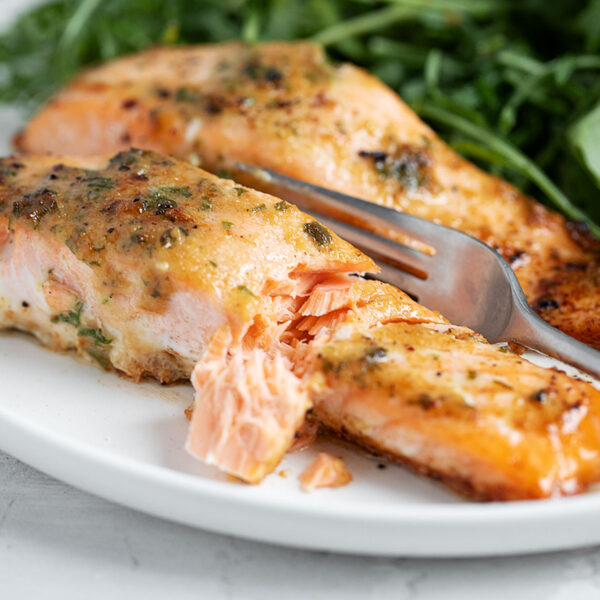
Easy and delicious oven-baked salmon fillets, topped with flavoured compound butter before baking to infuse the salmon with butter and flavour. Take your pick of five delicious compound butter flavours and enjoy a low-effort but high-reward dinner!
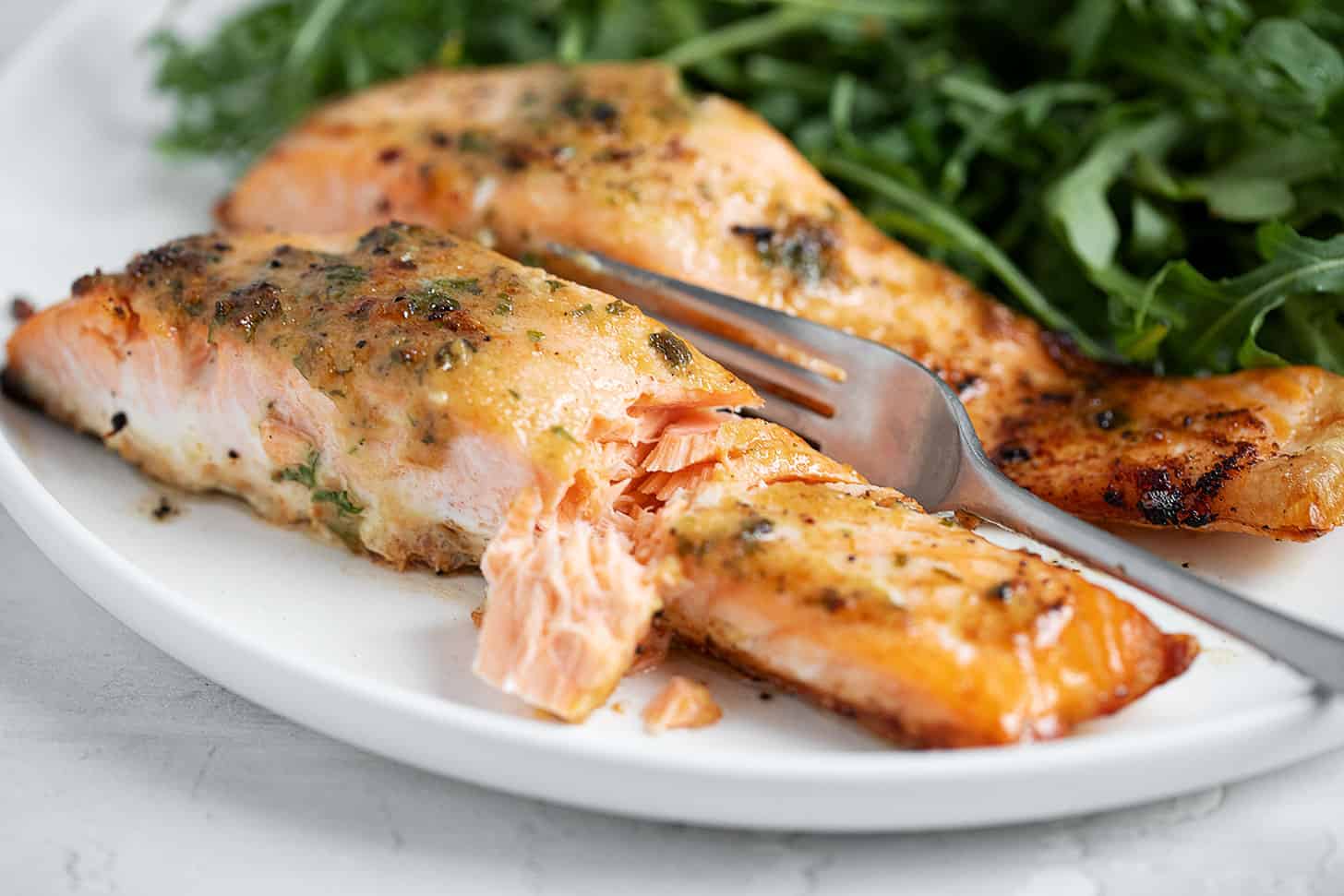
Baked salmon with compound butter is my go-to for a great last-minute, low-effort but delicious dinner. It is ideal for oven-baked salmon, but can also be used to top salmon after air frying, grilling or pan-frying.
Salmon fillets are topped with a simple flavoured butter and are baked in the oven for less than 15 minutes. Take your pick from 4 delicious flavoured compound butter toppings, based on your mood or what you have on hand.
Ingredients and substitutions
A few notes about the key ingredients …
Salmon – Any cut of salmon will work here, from fillets to larger slab pieces, skin on or skin off.
Butter – I generally use salted butter, with the one exception being miso compound butter. As miso is very salty, using unsalted butter, if available, will keep it from being overly salty.
Herbs – You can use fresh or dried herbs for the compound butters. Fresh herbs are brighter in colour and flavour, but they limit the refrigerator life of the compound butter. Dried herbs will extend the shelf life of the compound butter. Fresh herbs are also more likely to scorch if you like to finish the salmon under the broiler.
How to make baked salmon with compound butter: step-by-step
This is a visual summary of the steps to make this recipe. Scroll down to the Recipe Card below for the complete list of ingredients and instructions.
You only need to pick and make one compound butter flavour for a meal. If you like, make several flavours, use one right away and freeze the rest for future salmon dinners!
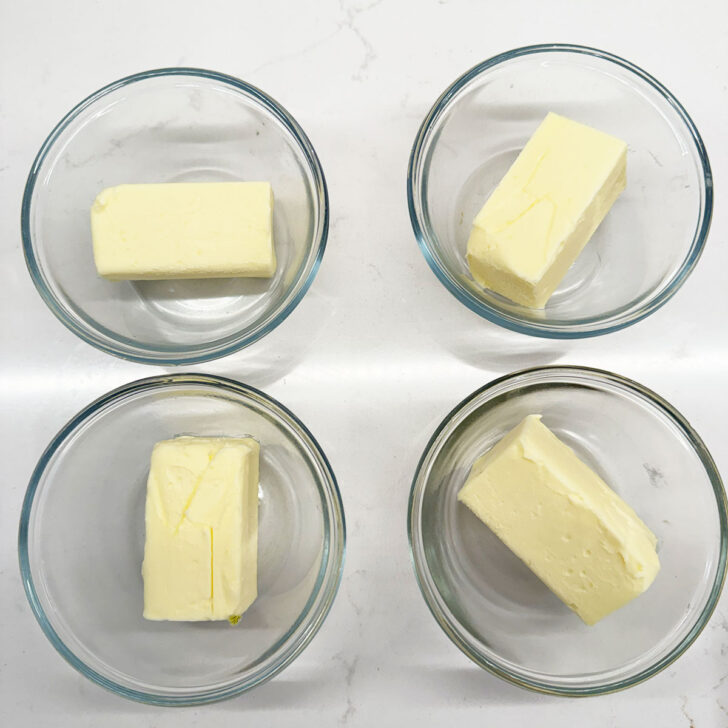
Step 1: Add the butter to a small dish or plate.
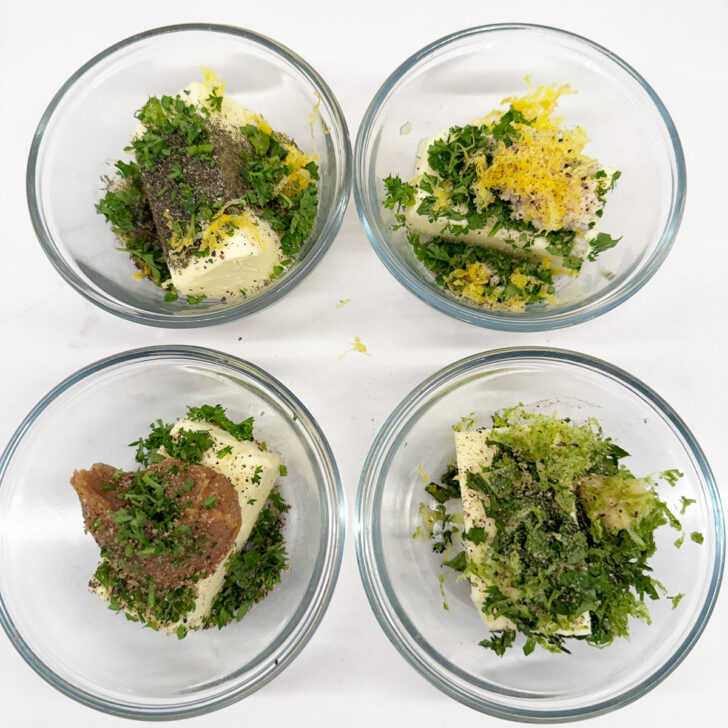
Step 2: Add the flavourings for the flavour of compound butter you want to make.
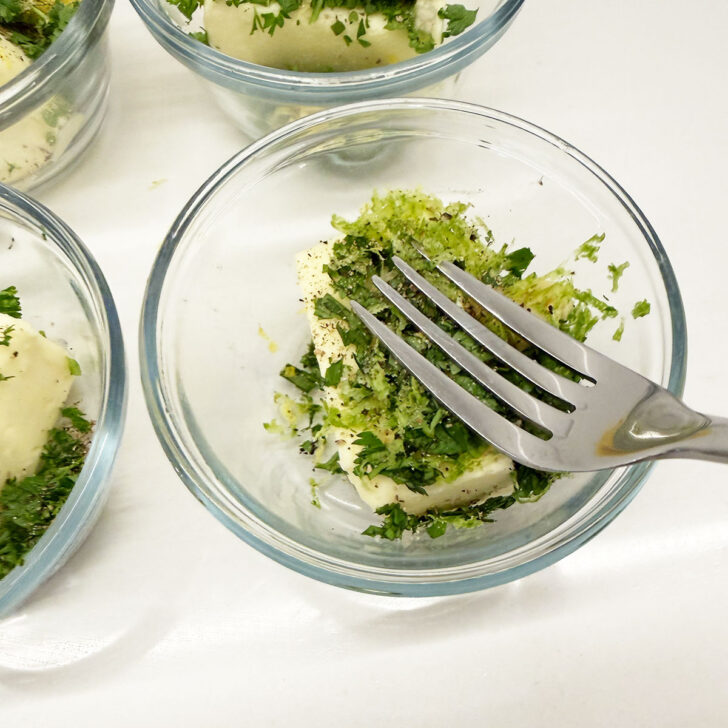
Step 3: Use a fork to press the flavourings into the butter until well combined.
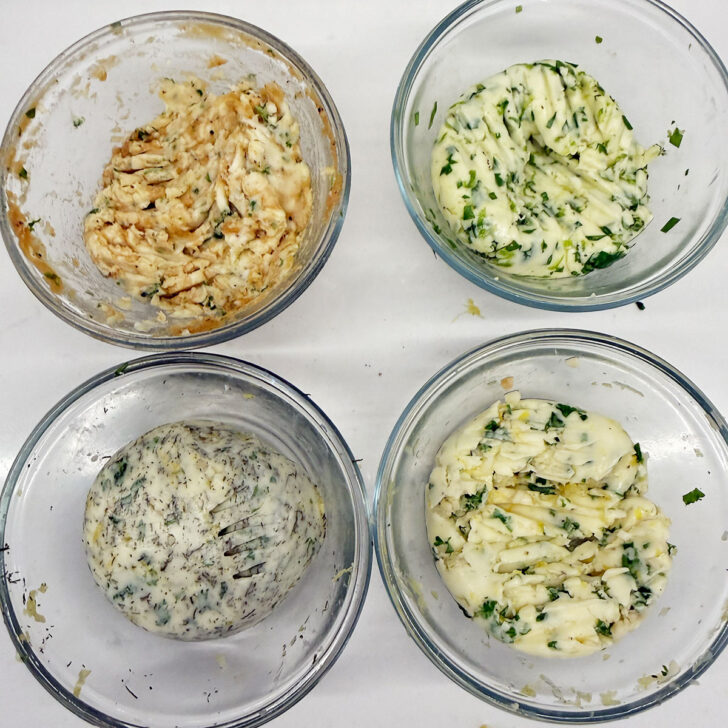
Step 4: Make a variety of butters at one time and freeze the extras!
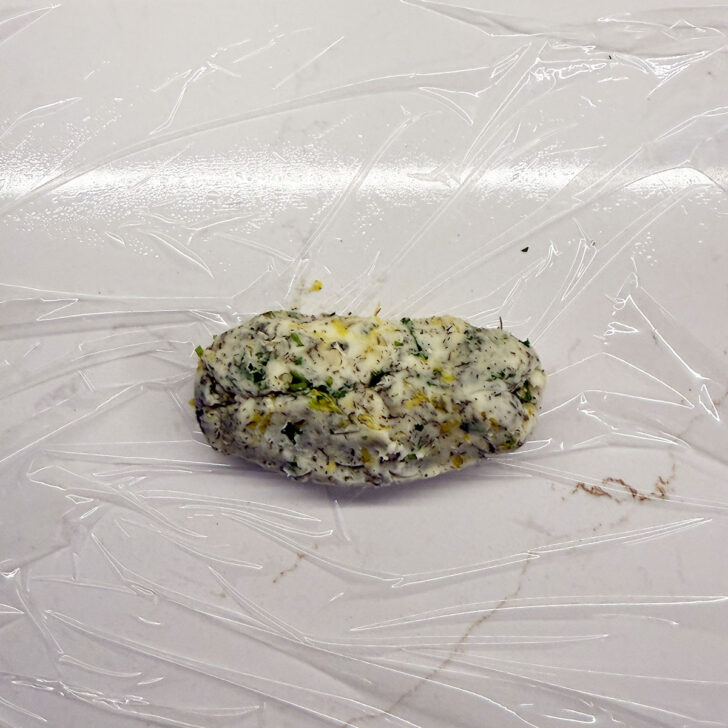
Step 5: Remove the butter to a sheet of plastic wrap and shape into a log.
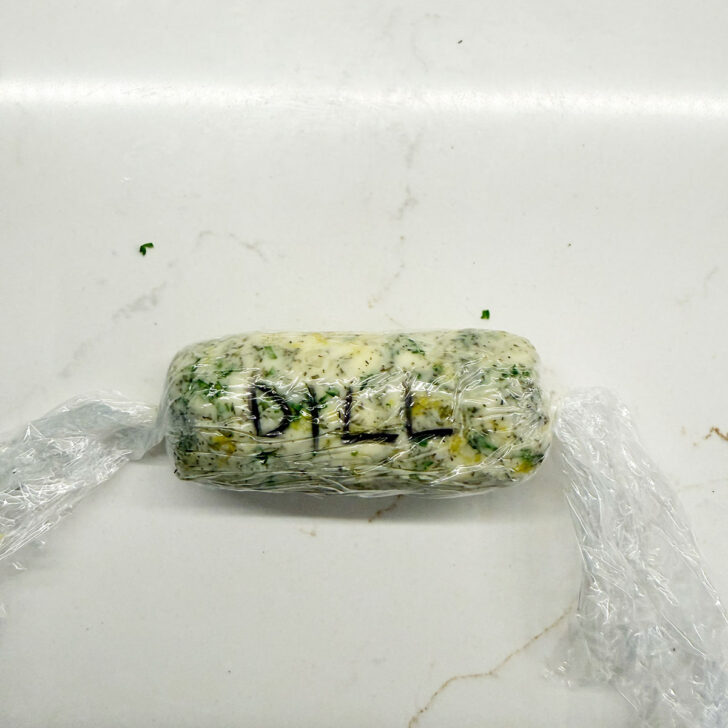
Step 6: Wrap and roll on the counter to shape into a 1-inch diameter log. Label if you like.
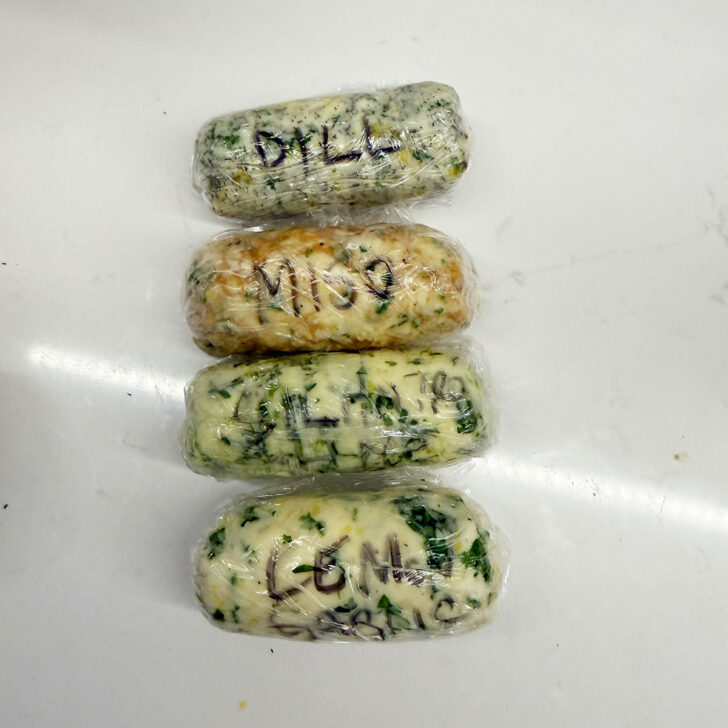
Step 7: Use one and freeze the rest!
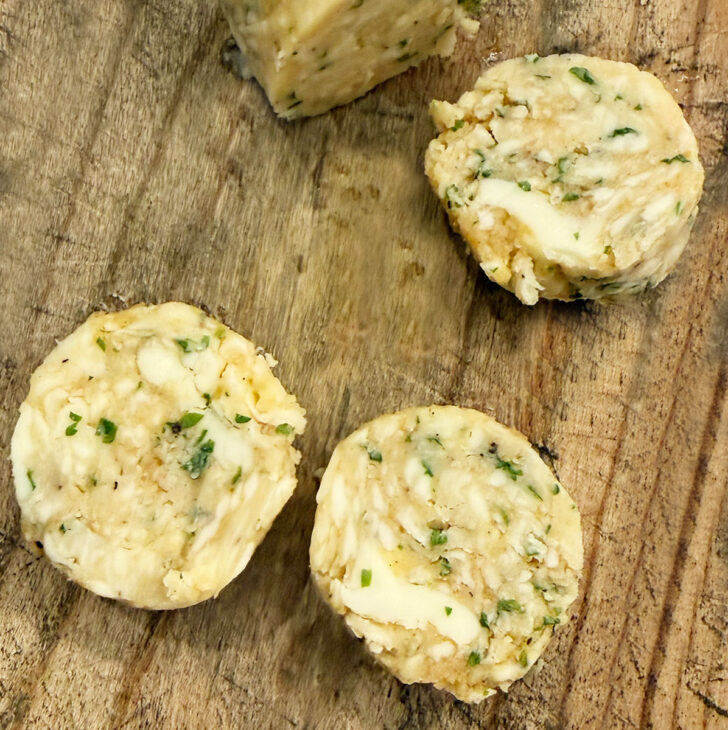
Step 8: Cut the log into 1/2-3/4-inch slices.
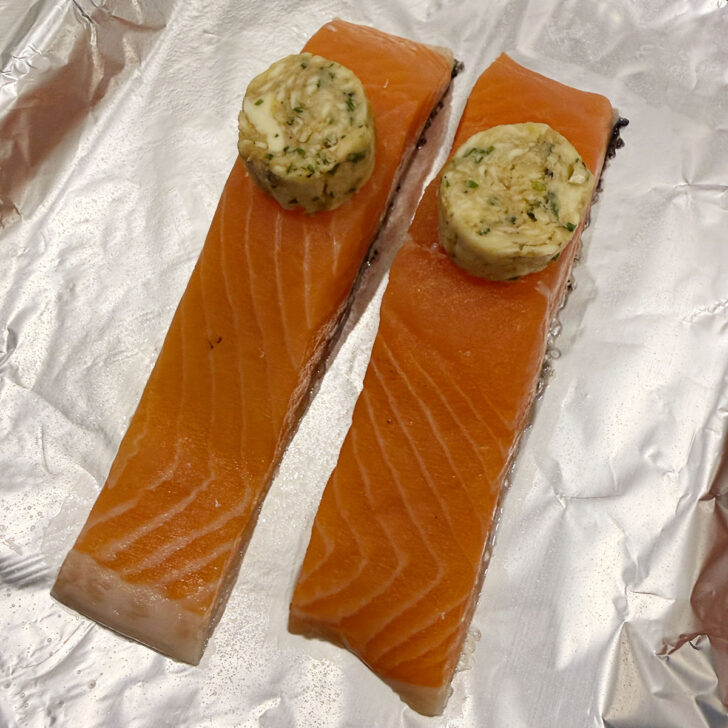
Step 9: Place a slice on top of the salmon before baking. Bake and enjoy!
Recipe tips!
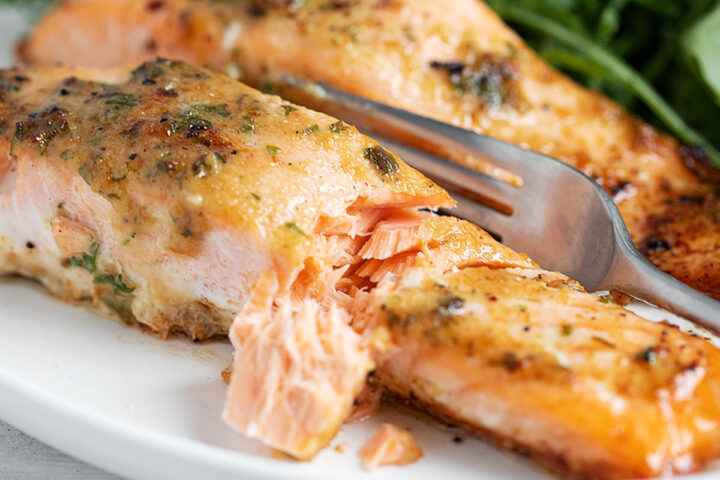
- I’m a big fan of the miso compound butter, and it is the one shown in this post’s photos.
- You only need to make one compound butter for a meal, but you can make extra and freeze them to have handy for future salmon dinners!
- While you could use a food processor to mix up the compound butter, I’ve found a bowl and a fork work just fine and save you from having to clean a buttery food processor bowl.
- As the compound butter melts on the salmon as it bakes, the butter will melt and distribute, but the flavourings and herbs will tend to stay right where the pat of butter was placed. I like to use a spoon to spread the herbs over the entire salmon fillet halfway through baking.
Variations
If you’d like to air-fry, pan-fry, grill or broil your salmon, place the compound butter on the salmon after cooking instead, allowing it to melt on the salmon from the residual heat.
Compound butter is also nice on white fish, steak, skin-on chicken or vegetables, such as green beans or asparagus.
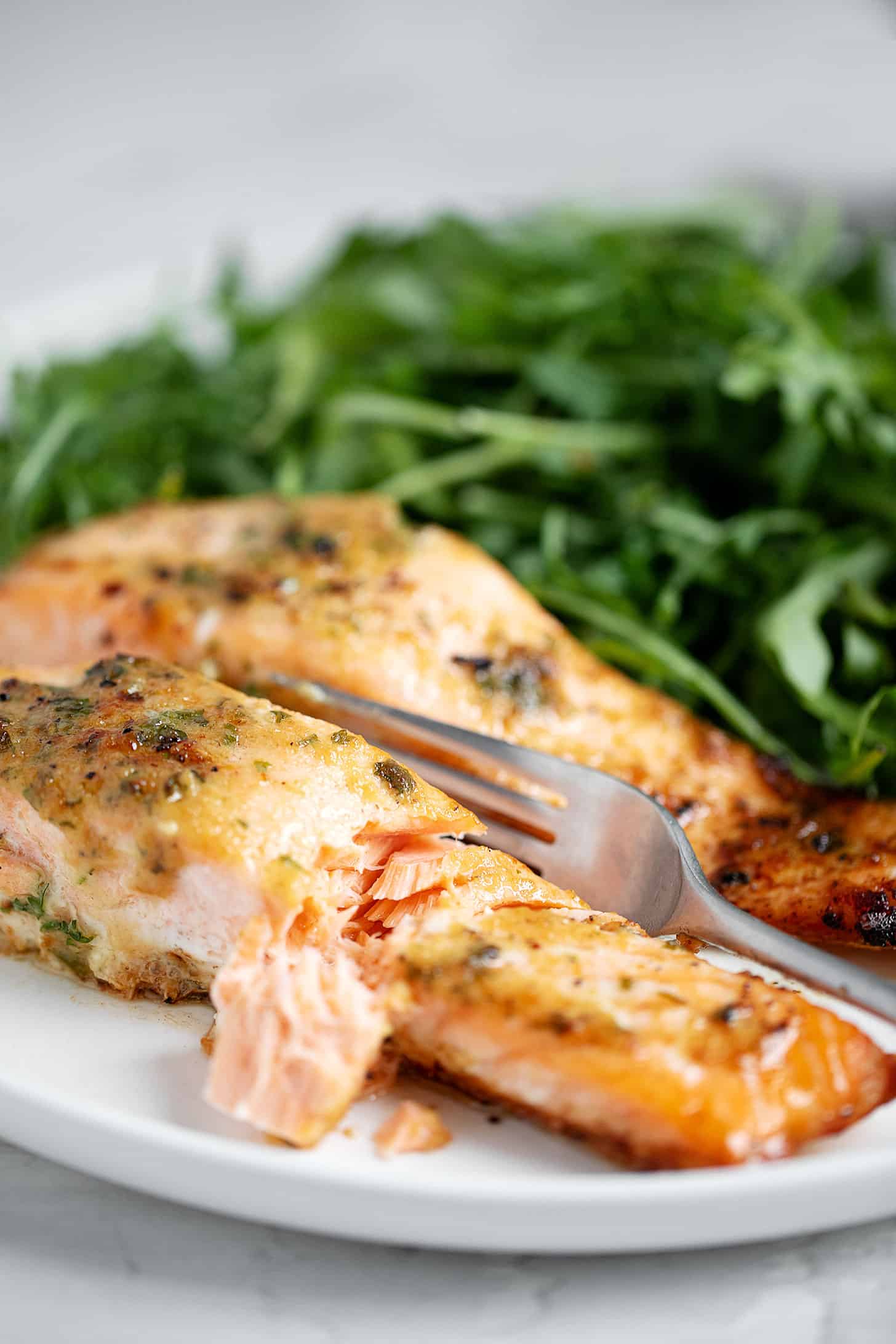
What to serve with salmon and compound butter
I enjoy baked salmon with rice flavoured with lemon juice and parsley, and a steamed or roasted green vegetable such as broccoli, asparagus or green beans. You could also serve it simply with a green salad.
Making ahead, storing and freezing compound butter
How long compound butter will keep in the refrigerator depends on the ingredients. Compound butters with fresh herbs and/or raw garlic must be used within 5 days. Miso compound butter (without fresh herbs) or compound butter with only dried herbs will last the longest, keeping up to 1 month in the fridge.
That said, take the guesswork out of it and freeze your compound butter. You can freeze compound butter for up to 3 months. Wrap well in plastic wrap, then wrap in foil or place in a freezer bag or container to avoid transferring flavours to other items in the freezer. To use from frozen, unwrap, rinse a knife under hot running water, then use the warmed knife to slice a piece of compound butter from the frozen log.
Want to save this recipe?
Enter your email and I’ll send it to your inbox. Plus, you’ll get great new recipes from me every week!
By submitting this form, you consent to receive emails from Seasons and Suppers.
You can unsubscribe at any time.
Get the Recipe: Baked Salmon with Compound Butter
Ingredients
- 4 salmon fillets, skin-on or skinless, or a larger salmon
Miso Compound Butter (my favourite!):
- 4 Tablespoons butter, unsalted butter if available
- 1 1/2 Tablespoons white miso
- 1 Tablespoons fresh parsley, finely chopped, or 1 teaspoon dried parsley
- freshly ground black pepper (no salt!)
Lemon Dill Compound Butter:
- 4 Tablespoons salted butter
- 1 Tablespoon fresh dill leaves, finely chopped, or 1 teaspoon dried dill weed
- 1 teaspoon lemon zest
- salt and freshly ground pepper
Lemon Garlic Herb Compound Butter:
- 4 Tablespoons salted butter
- 1 Tablespoon fresh parsley, finely chopped or 1 teaspoon dried parsley
- 1 teaspoon lemon zest
- 1 teaspoon fresh garlic, minced
Pesto Compound Butter:
- 4 Tablespoons salted butter
- 1 1/2 Tablespoons basil pesto
- 1 Tablespoon Parmesan cheese
- 1/2 teaspoon chopped garlic, optional
- salt and freshly ground pepper
Cilantro Lime Compound Butter:
- 4 Tablespoons salted butter
- 1 Tablespoon fresh cilantro, finely chopped
- 1 teaspoon lime zest
- 1/4 teaspoon fresh ginger, grated or a pinch of dried ginger
- salt and freshly ground pepper
Instructions
- To make the compound butter: Add the butter to a small bowl or plate. If you have the time, let it stand for 15 minutes to soften a bit, but it is best if it is not completely softened. Add the herbs and other flavourings for your chosen compound butter flavour. Use a fork to press the flavourings into the butter until well combined.
- Transfer the butter mixture to a piece of plastic wrap and roughly shape it into a log. Wrap the butter in the plastic wrap, then roll it on the counter to shape it into a round about 1 inch in diameter. Use immediately, or label and refrigerate or freeze. *See Recipe Notes for safe refrigeration guidelines and freezing instructions.
- To bake the salmon: Preheat the oven to 400F or 425F (regular bake setting – adjust as needed for convection or fan-assisted ovens). Opt for 425F if you like crispy skin and/or a faster bake. Line a baking sheet with aluminum foil and place the salmon fillets on top of the foil. Pat the salmon dry with a paper towel. Don't season the salmon, as the seasoning is in the compound butter!
- Cut the compound butter roll into 1/2-3/4-inch wide pieces. Place a compound butter piece on top of each of the four salmon fillets, placing it over the thickest part of the salmon. *If baking a larger salmon slab cut, you can distribute 2-4 compound butter pieces along the length of the salmon.
- Bake the salmon for 8-12 minutes at 425F or 10-14 minutes at 400F, depending on the thickness of the salmon. Bake until the salmon reaches 145F internal temperature and flakes easily when tested with a fork.
- You can make the compound butter up to 3 days ahead. See the Recipe Notes below for refrigeration and freezing guidance for leftover compound butter.
Notes
More salmon recipes to love!


Hi! I’m Jennifer, a home cook schooled by trial and error and almost 40 years of getting dinner on the table! I love to share my favourite recipes, both old and new, together with lots of tips and tricks to hopefully help make your home cooking enjoyable, stress-free, rewarding and of course, delicious!