

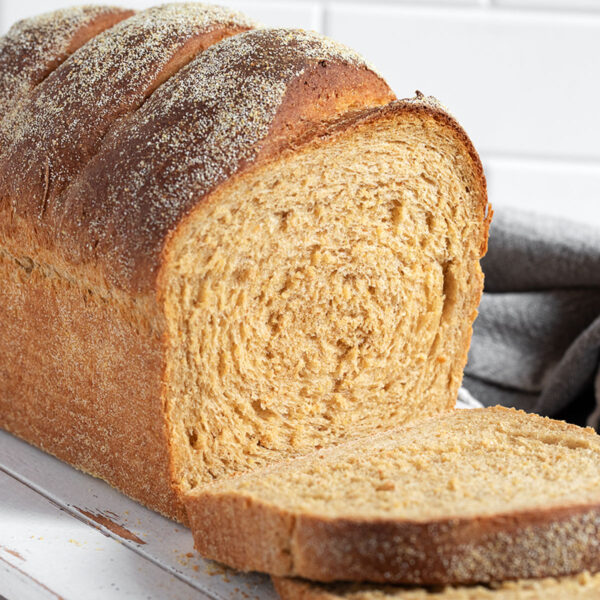
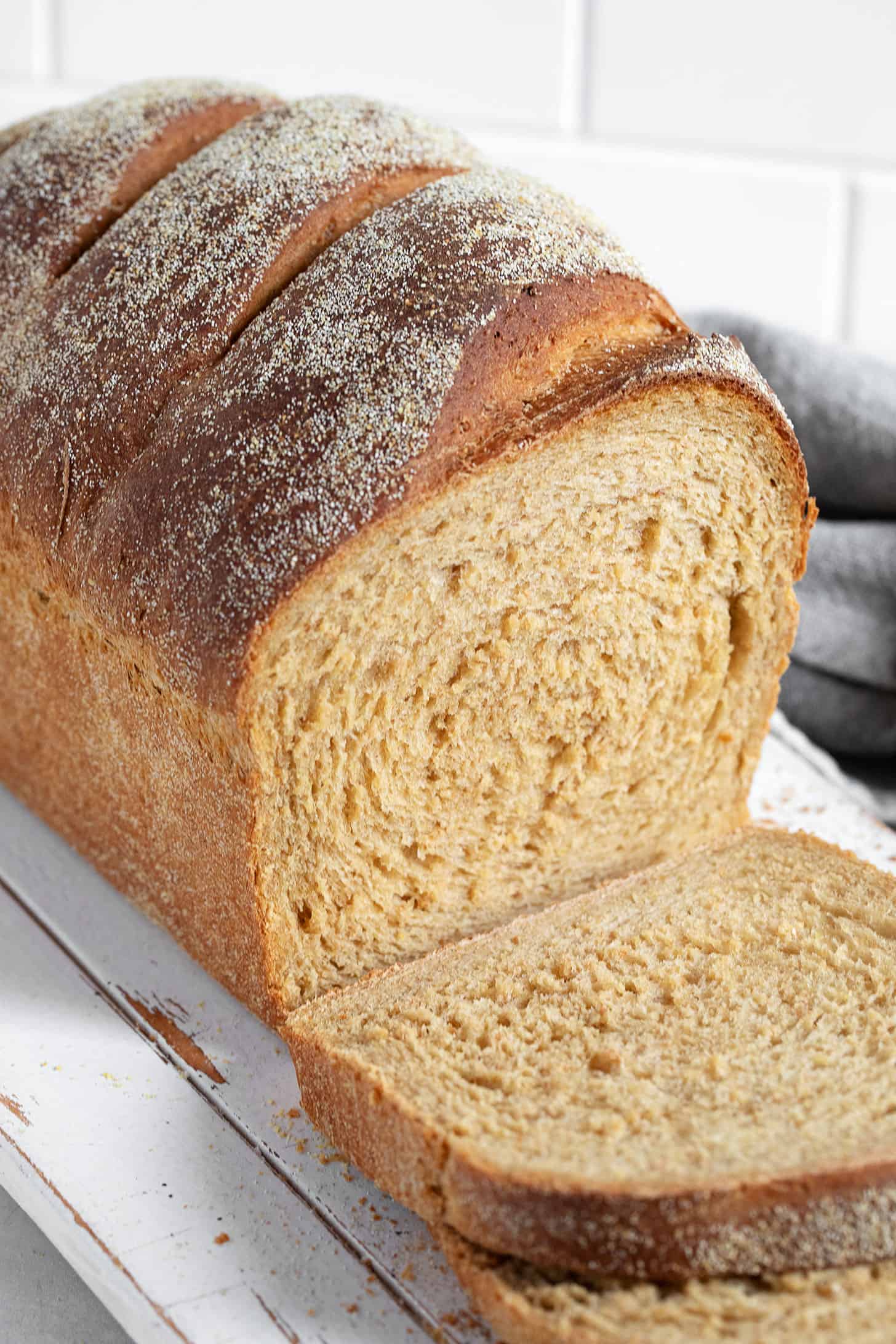
Anadama bread is a delicious cornmeal and molasses bread, with roots in New England. This version has a bit of whole-wheat flour, as well. This lightly sweet loaf has a fabulous light crumb, while being a sturdy slice that’s perfect for sandwiches or toast.
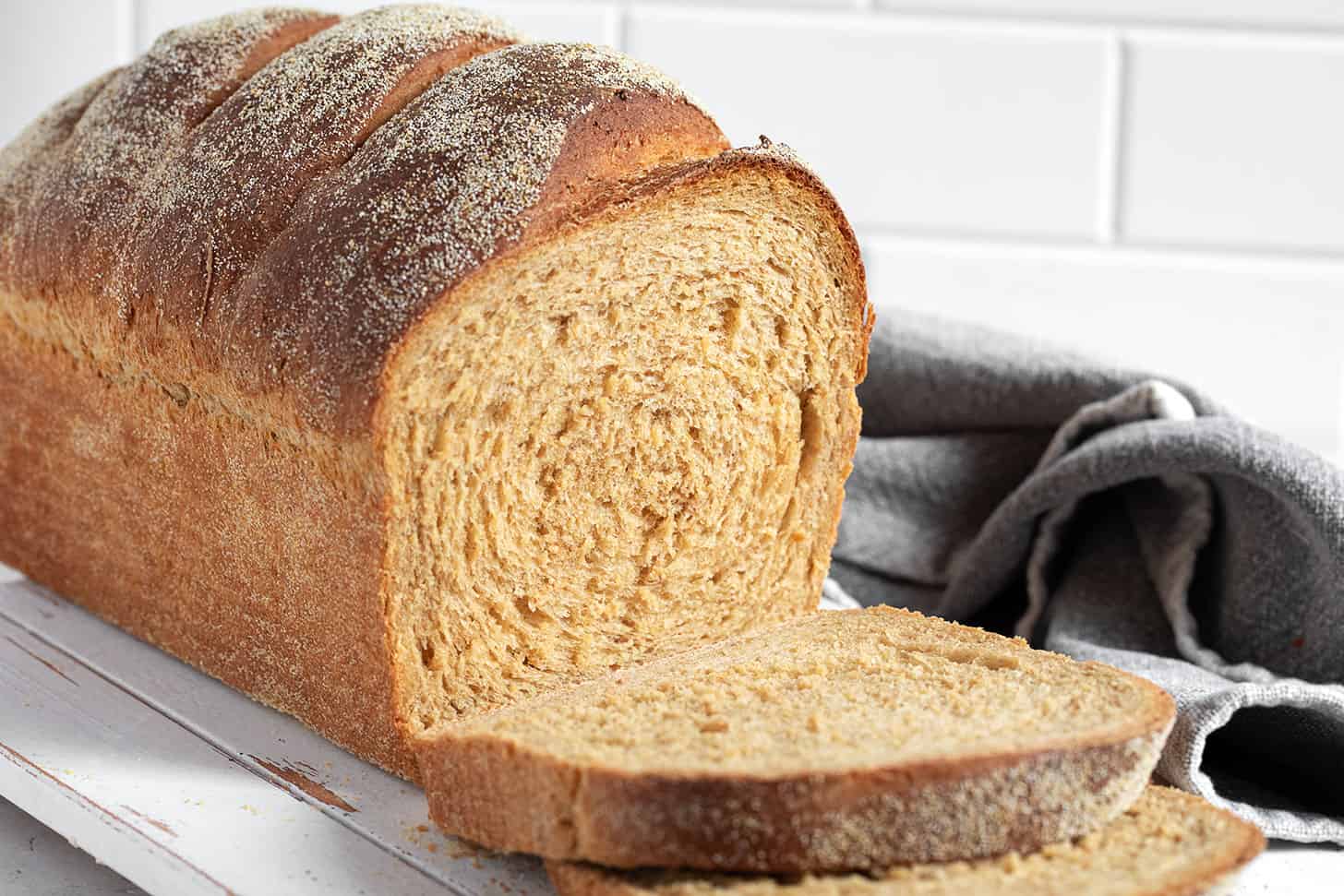
Quick look: Anadama Bread
What is it? This Anadama bread is a yeast loaf bread, made with cornmeal, whole wheat flour, all-purpose flour and molasses.
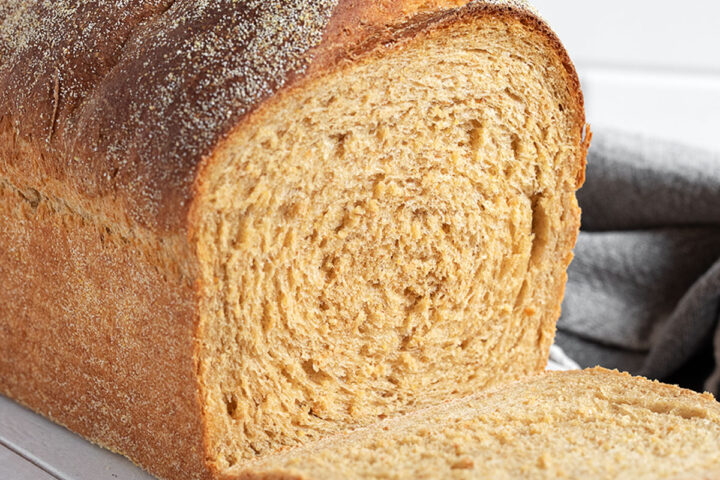
Why you’ll love it! A little different from the usual, Anadama bread is a hearty, grainy loaf, but still has a light and tender crumb. This bread is lightly sweet (from the molasses) and bakes up with a beautiful crust!
Anadama bread makes excellent sandwich bread and is lovely toasted with butter. It is a perfect bread to serve alongside soup and stew.
Anadama bread is the perfect bread to serve alongside soup or stew. Try it alongside this Mushroom Barley Soup or this Easy Cod and Corn Chowder.
How is it made? This loaf includes a starter dough of a bit of flour, water and yeast that needs to stand at room temperature for a couple of hours. During that time, the cornmeal is also quickly cooked with some water to soften it for the bread.
After that, the bread comes together like a typical yeast loaf bread, with two roughly 1-hour rises before baking. This recipe makes one loaf in a 9×5-inch loaf pan.
So what does “Anadama” mean?
According to newengland.com …
“Local legend overwhelmingly credits a Gloucester fisherman with coining the term as a not-so-loving tribute to his wife, Anna. It seems Anna wasn’t blessed with talent in the kitchen, and after numerous bowls of molasses and cornmeal porridge for supper, the fisherman angrily tossed in some flour and yeast one evening and threw the mixture into the oven. While it baked, he sat muttering, “Anna, Damn her!” and the name was born.”
Key ingredients and substitutions
A few notes about the key ingredients …
Cornmeal – Regular cornmeal is all that is needed for this loaf, which is typically a fairly fine grind.
Molasses – Opt for “Fancy” molasses for the best flavour. Cooking molasses may work, though the molasses flavour may be more pronounced. I don’t recommend blackstrap molasses, which is just too harsh in flavour.
Bread flour – While bread flour is recommended, for best results, you can substitute all-purpose flour, if needed. You may need to use a bit more all-purpose flour than what is specified for bread flour to get the dough to the required consistency.
Yeast – Either Active Dry Yeast or Instant Yeast will work well with this bread recipe.
How to make Anadama bread: step-by-step
This is a visual summary of the steps to make this recipe. Scroll down to the Recipe Card below for the complete list of ingredients and instructions.
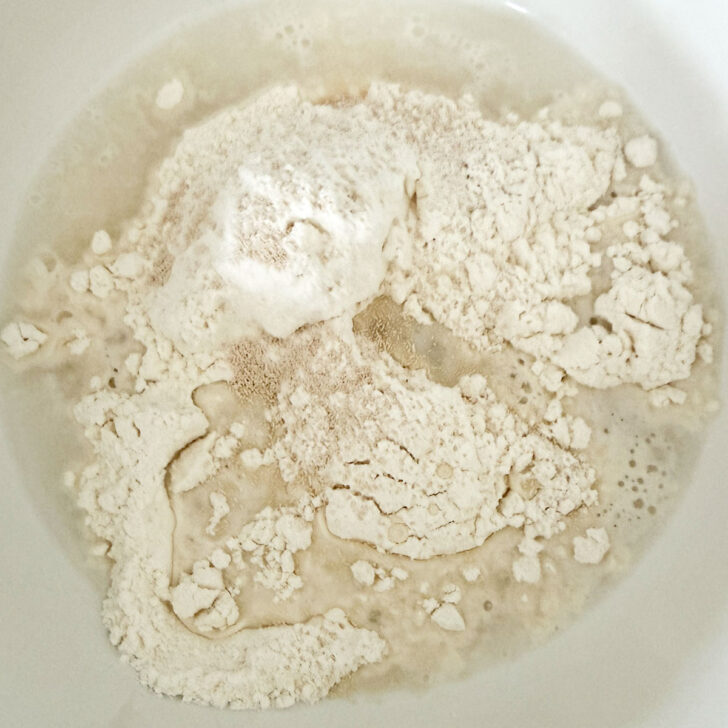
Step 1: Add the ingredients for the Starter Dough to a small bowl.
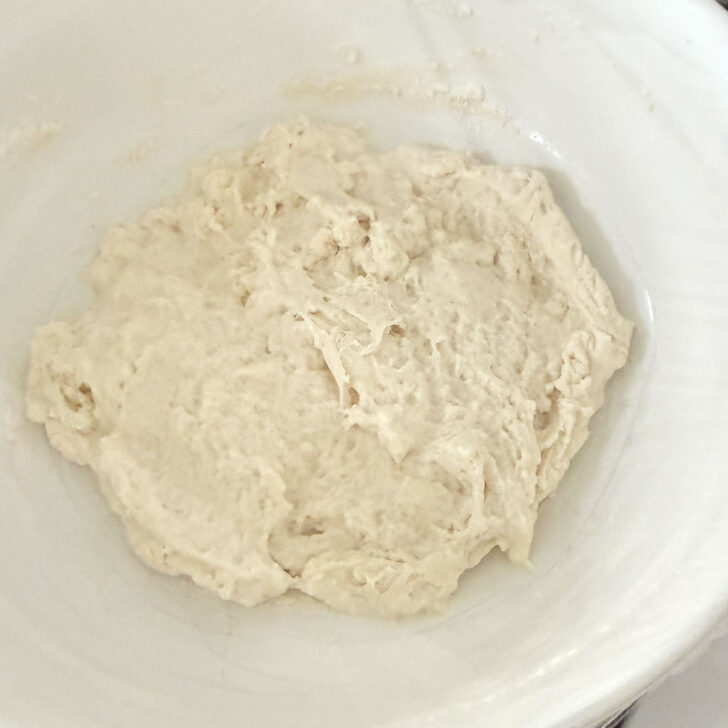
Step 2: Mix the dough together, cover with plastic wrap and let stand for at least 2 hours or up to 18 hours.
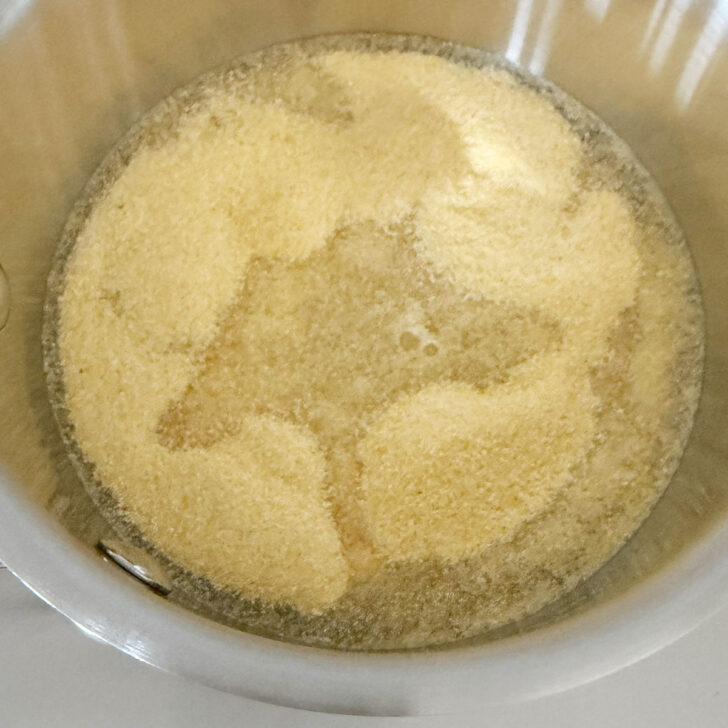
Step 3: While the starter dough is resting, add the cornmeal and water to a small saucepan and bring to a boil.
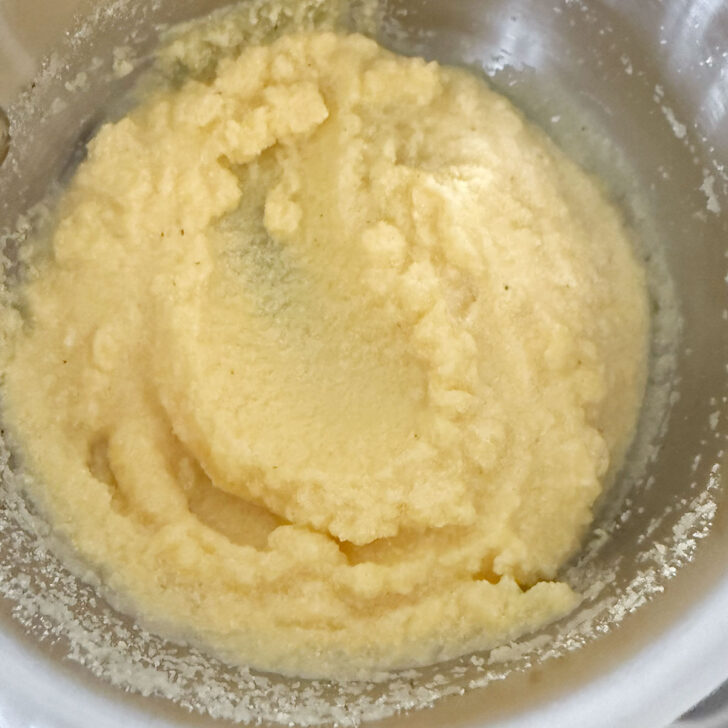
Step 4: Cook the cornmeal mixture until all the water has been absorbed.
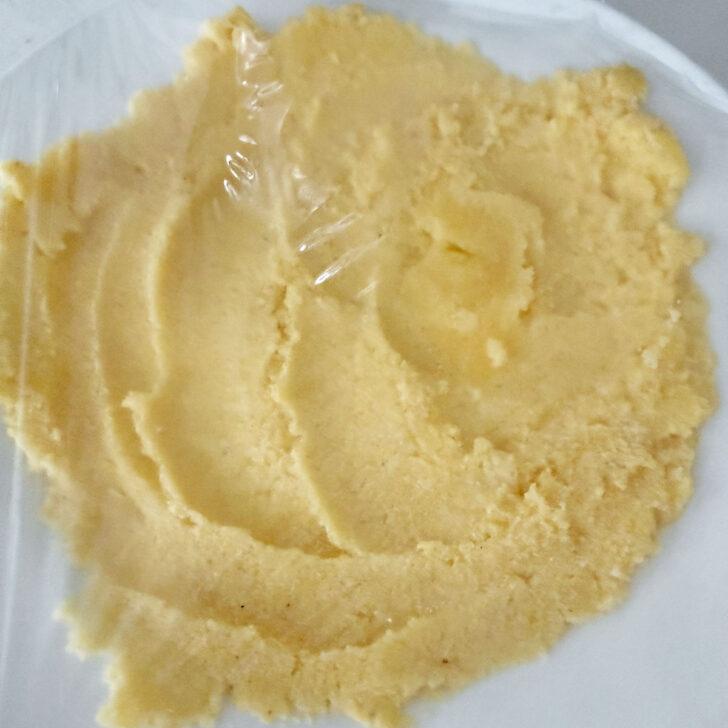
Step 5: Spread the cornmeal mash onto a plate and cover with plastic wrap. Allow to cool to room temperature before using.
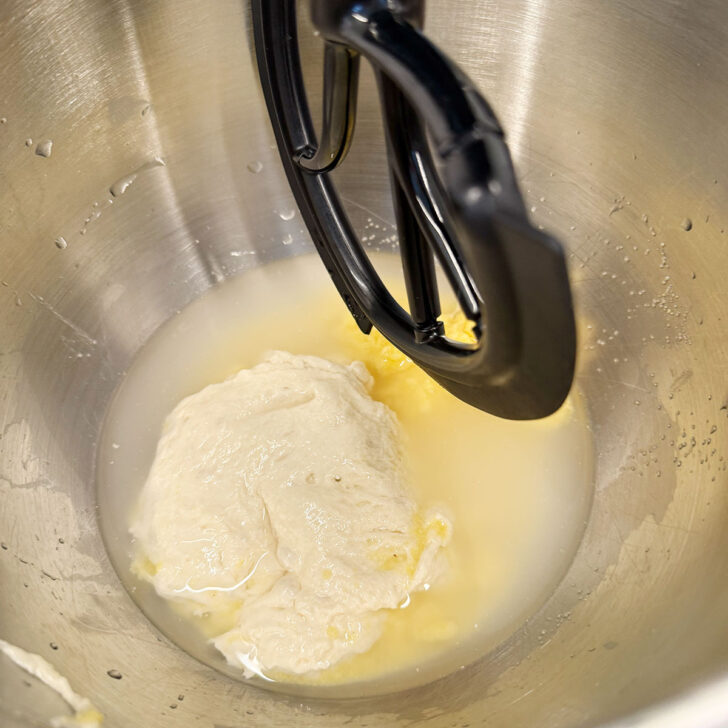
Step 6: Start the dough with the paddle attachment, adding the water, yeast, starter dough and cornmeal mash and mixing together.
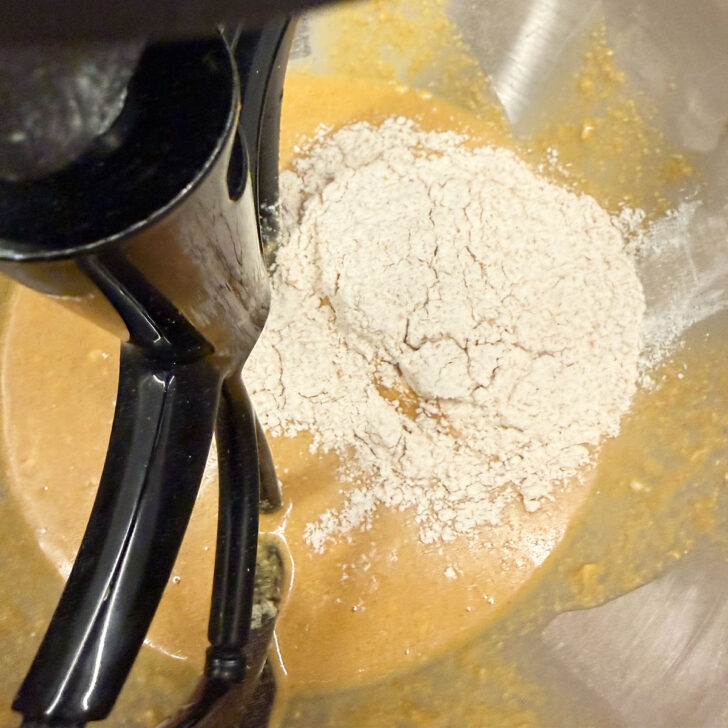
Step 7: Add the whole wheat flour and mix in, then switch to the kneading hook.
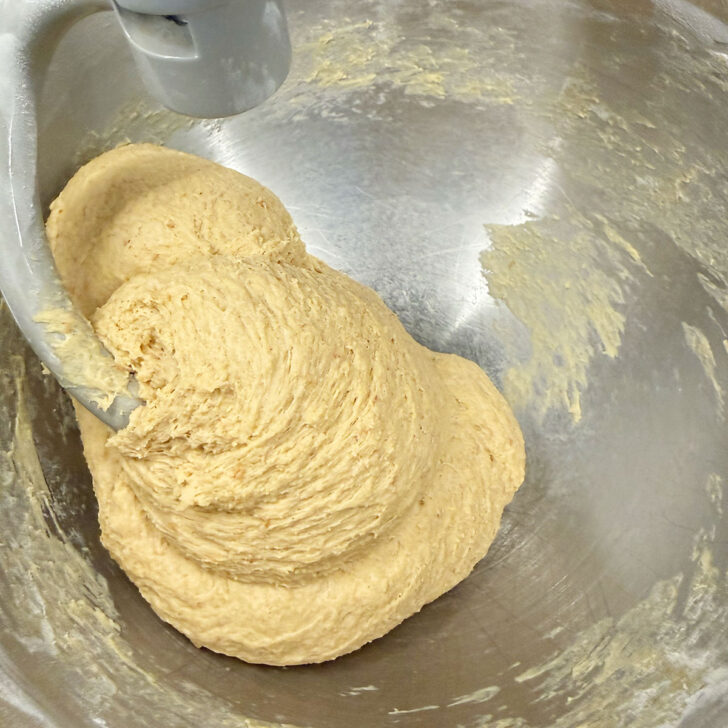
Step 8: Add part of the bread flour and knead in, then add the last part of the flour a bit at a time, until the dough comes together, wraps the kneading hook and cleans the bowl fairly well.
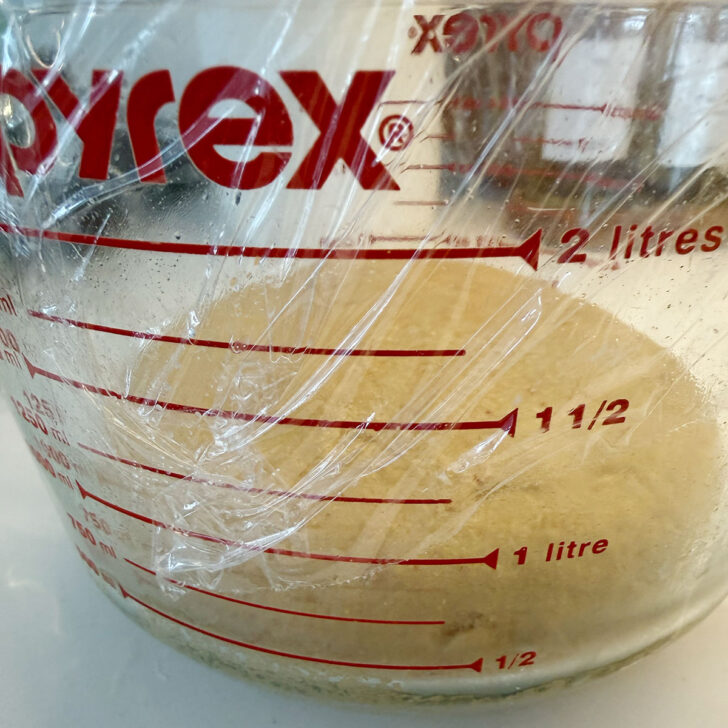
Step 9: Knead the dough briefly, then set it to rise until doubled in a greased 8-cup measuring cup or large bowl.
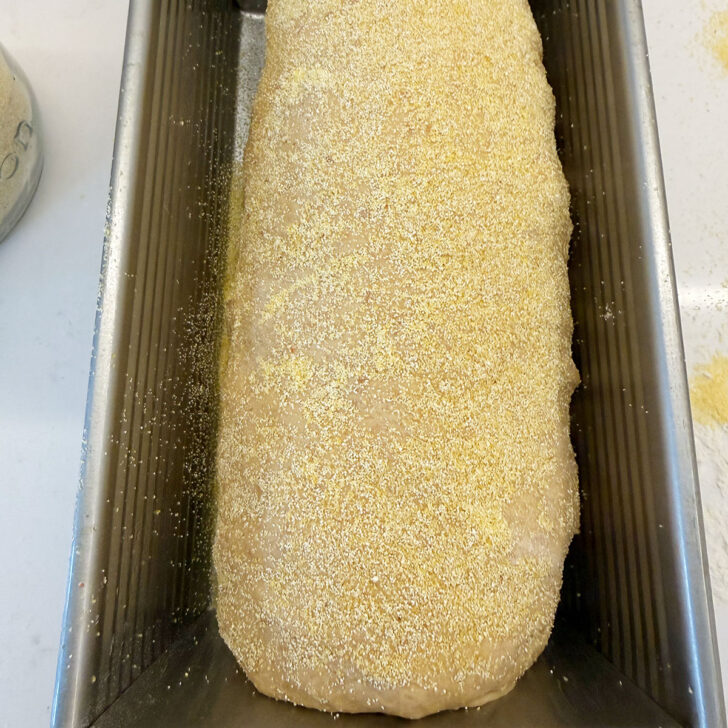
Step 10: After rising, pat into a rectangle, roll up jelly-roll style, then roll the top of the loaf in cornmeal. Place into a greased 9×5-inch loaf pan.
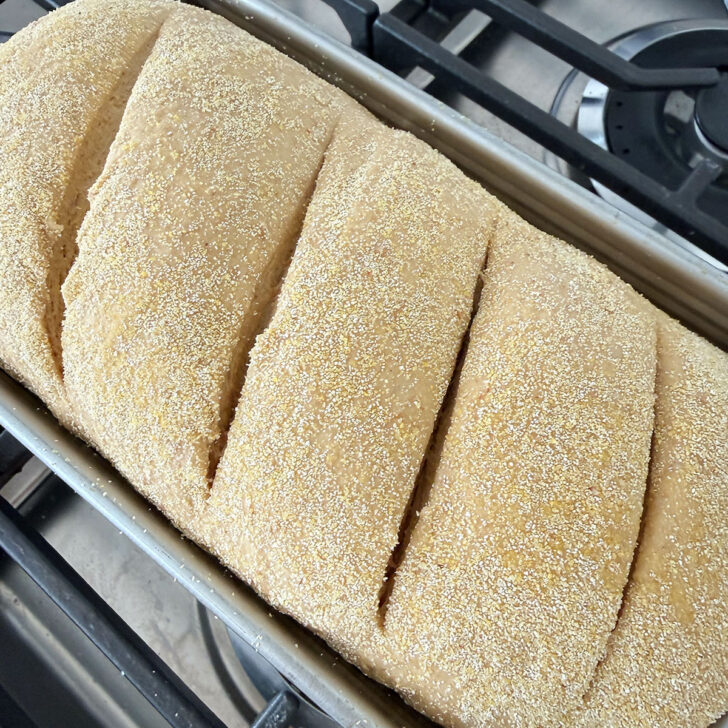
Step 11: Let the dough rise until it crests the pan by about an inch, then slash the top of the loaf with 4 diagonal cuts. Bake.
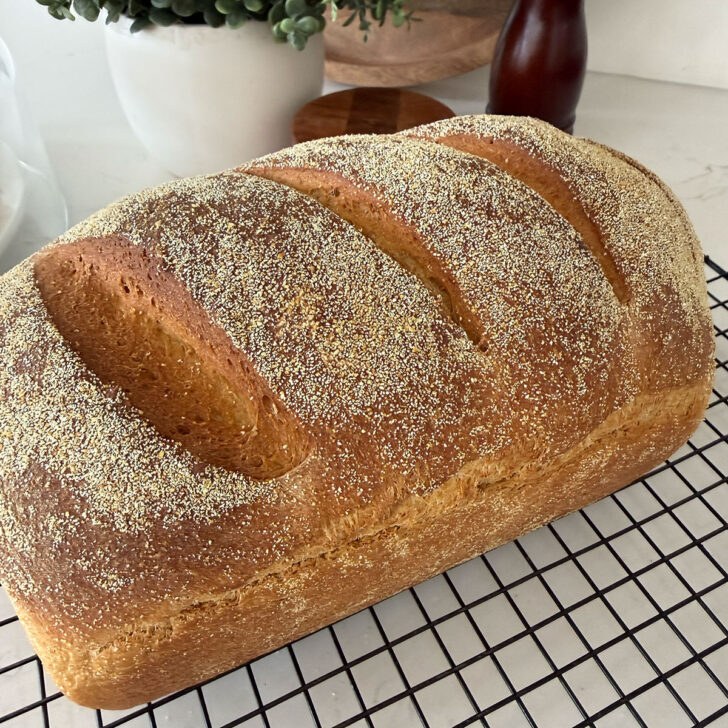
Step 12: Allow the baked loaf to cool completely before slicing, to avoid a gummy loaf.
Recipe tips!
- As with all yeast bread recipes, the flour measurement is approximate. Only add as much flour as is needed to bring the dough to the specified consistency. That may be a bit less or a bit more than specified.
- Likewise, rising times may vary in your kitchen. Always let the dough rise until just doubled in size, however long that takes and don’t rely on a clock. In your kitchen, it may be faster or slower than suggested in the recipe.
- The starter dough is a great way to add extra flavour to homemade yeast breads. The starter dough needs at least two hours of sitting time, which works well for a same-day bread. If you’d like, you can extend the standing time of the starter dough up to 12 hours! (Extra time equals extra flavour, too, so it’s great to stir up the night before!)
Storing and freezing
Store bread in an airtight container or bread bag at room temperature for up to 3 days. To extend the loaf, you can refrigerate it after about 2 days at room temperature and get a few extra days of freshness from the loaf.
For longer storage, wrap well and freeze for up to 3 months.
Want to save this recipe?
Enter your email and I’ll send it to your inbox. Plus, you’ll get great new recipes from me every week!
By submitting this form, you consent to receive emails from Seasons and Suppers.
You can unsubscribe at any time.
Get the Recipe: Anadama Bread
Ingredients
Starter Dough (rest for 2 hours – 12 hours before using):
- 3/4 cup (91 g) bread flour, spooned and levelled *see Note 1 below
- 1/3 cup (91 g) water, room-temperature
- Pinch Instant yeast, *see Note 2 below if using Active Dry Yeast
Cornmeal Mash:
- 2/3 cup (140 g) water
- 1/2 cup (70 g) cornmeal, plus more for topping before baking
Dough:
- all of the Starter Dough from above
- all of the Cornmeal Mash from above
- 2/3 cup (150 g) lukewarm water, about 105F
- 2 1/2 teaspoons (8 g) Instant yeast
- 1/4 cup (85 g) Fancy molasses, *see Note 3 below
- 3 Tablespoons (40 g) vegetable or canola oil, or similar neutral-flavoured cooking oil
- 3/4 cup (90 g) whole wheat flour, spooned and levelled
- 1 1/2 teaspoons fine salt
- 2 1/2 – 3 cups (310-375 g) bread flour, spooned and levelled
Equipment
- 9×5-inch metal loaf pan
Instructions
- Mix the Starter Dough: Combine the 3/4 cup bread flour (spooned and levelled *see Note 1 below), 1/3 cup water (room-temperature), and Pinch Instant yeast (*see Note 2 below if using Active Dry Yeast) in a small bowl. Mix until thoroughly combined. Cover the bowl with plastic wrap and let it rest for 2-12 hours.
- Make the Cornmeal Mash: In a small saucepan, combine the 2/3 cup water and 1/2 cup cornmeal (plus more for topping before baking) and bring to a boil, stirring regularly. Bring the water to a boil. Once boiling, continue stirring/cooking until the liquid has been absorbed and the mixture is paste-like. Stir for 1 minute until no lumps remain and the mixture returns to a boil. Remove from the heat, spread the mixture on a plate, and cover with plastic wrap. Set aside until cooled before using.
- Mix the dough: To the bowl of a stand mixer fitted with the paddle attachment, add the 2/3 cup lukewarm water (about 105F), all of the Starter Dough from above, all of the Cornmeal Mash from above and 2 1/2 teaspoons Instant yeast. Stir with the paddle attachment to break up the cornmeal and incorporate the Starter Dough. Add the 1/4 cup Fancy molasses (*see Note 3 below) and 3 Tablespoons vegetable or canola oil (or similar neutral-flavoured cooking oil) and stir to combine. Add the 3/4 cup whole wheat flour (spooned and levelled) and 1 1/2 teaspoons fine salt, and stir in until well combined.
- Remove the paddle attachment and attach the dough hook to the mixer. Add 2 cups (250g) of the bread flour to the bowl and mix at the lowest speed for about 2 minutes or until no dry flour remains.
- Begin adding the last 1/2 – 1 cup of flour (62-125g) of flour a bit at a time with the mixer at Speed 2, allowing the flour to incorporate before adding more. Continue adding flour/mixing, until the dough clears the sides of the bowl and wraps the kneading hook. Continue to knead the dough at Speed 2 for 5 to 7 minutes. At the end of mixing, the dough will have gathered around the hook and will appear elastic, and will be somewhat tacky. (See the Step-by-Step photos in the Recipe Post above to see what the finished dough should look like.)
- Remove the dough to a lightly floured work surface and knead briefly, adding additional flour only if the dough is sticking to your hands or the work surface. Form the dough into a ball and place it into a greased bowl. Cover the bowl with plastic wrap and set at room-temperature to rise until doubled in size, about 1 – 1 1/2 hours.
- Remove the dough to a lightly floured work surface. Gently deflate the dough. Using your palms or a rolling pin, roll the dough into a rectangle about 9-inches wide and 16-18-inches long. Starting from the short end, roll the dough up jelly-roll style and pinch the seam together well. Sprinkle some cornmeal onto the work surface in a line about 9-inch long and 3-4 inches wide. Roll the top of the shaped loaf in the cornmeal to coat. Place the formed loaf into a greased 9 x 5-inch metal bread pan.
- Spray a sheet of plastic wrap with cooking spray and place over the loaf with the sprayed side down. Allow the loaf to rise for about 1 hour, or until the bread crests the sides of the loaf pan by about 1-1 1/2 inches. Toward the end of the proofing time, preheat the oven to 375°F (non-convection/not fan-assisted)
- Using a bread lame or a small, sharp knife, make four diagonal slashes across the top of the loaf. Bake the loaf for 35 to 40 minutes until it is a deep golden brown, and an instant-read thermometer inserted into the centre of the loaf registers 195°F to 200°F. Remove from the oven and immediately remove the loaf from the pan to a wire rack to cool. Allow to cool completely before slicing.
- Store the bread at room temperature in an airtight container or bag for 3-4 days. For longer storage, wrap well and freeze for up to 3 months.
Notes
More yeast bread recipes to love!

Hi! I’m Jennifer, a home cook schooled by trial and error and almost 40 years of getting dinner on the table! I love to share my favourite recipes, both old and new, together with lots of tips and tricks to hopefully help make your home cooking enjoyable, stress-free, rewarding and of course, delicious!


This is so fun! I grew up near Boston and my mother used to make Anadama bread. I hadn’t heard of it in years. Now I will be making your recipe. Thanks for the memories!
So glad to hear, Mim :) Enjoy!