

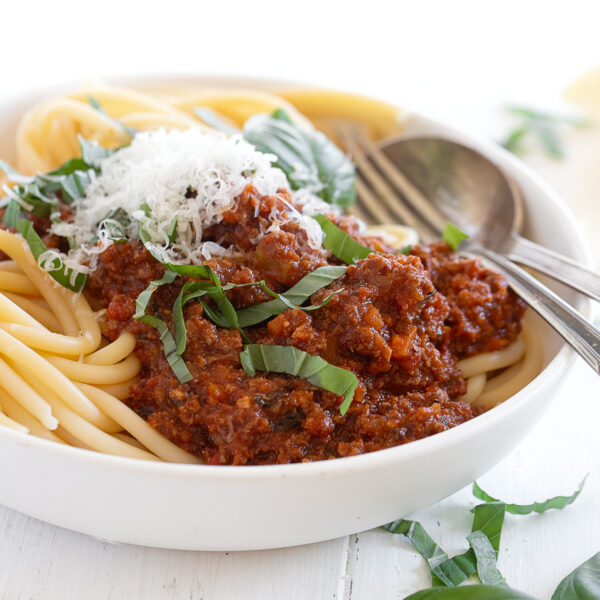
This classic Italian meat sauce recipe is my tried and true, slow‑simmered tomato and ground beef sauce, perfect over spaghetti and other pasta or layered into lasagna and baked pastas like manicotti. It’s an Italian‑style tomato meat sauce (ragu) with a rich, savoury flavour, lots of garlic, carrot, onion and herbs, and a long, gentle simmer that brings it all together.
Classic Italian meat sauce recipe: at a glance
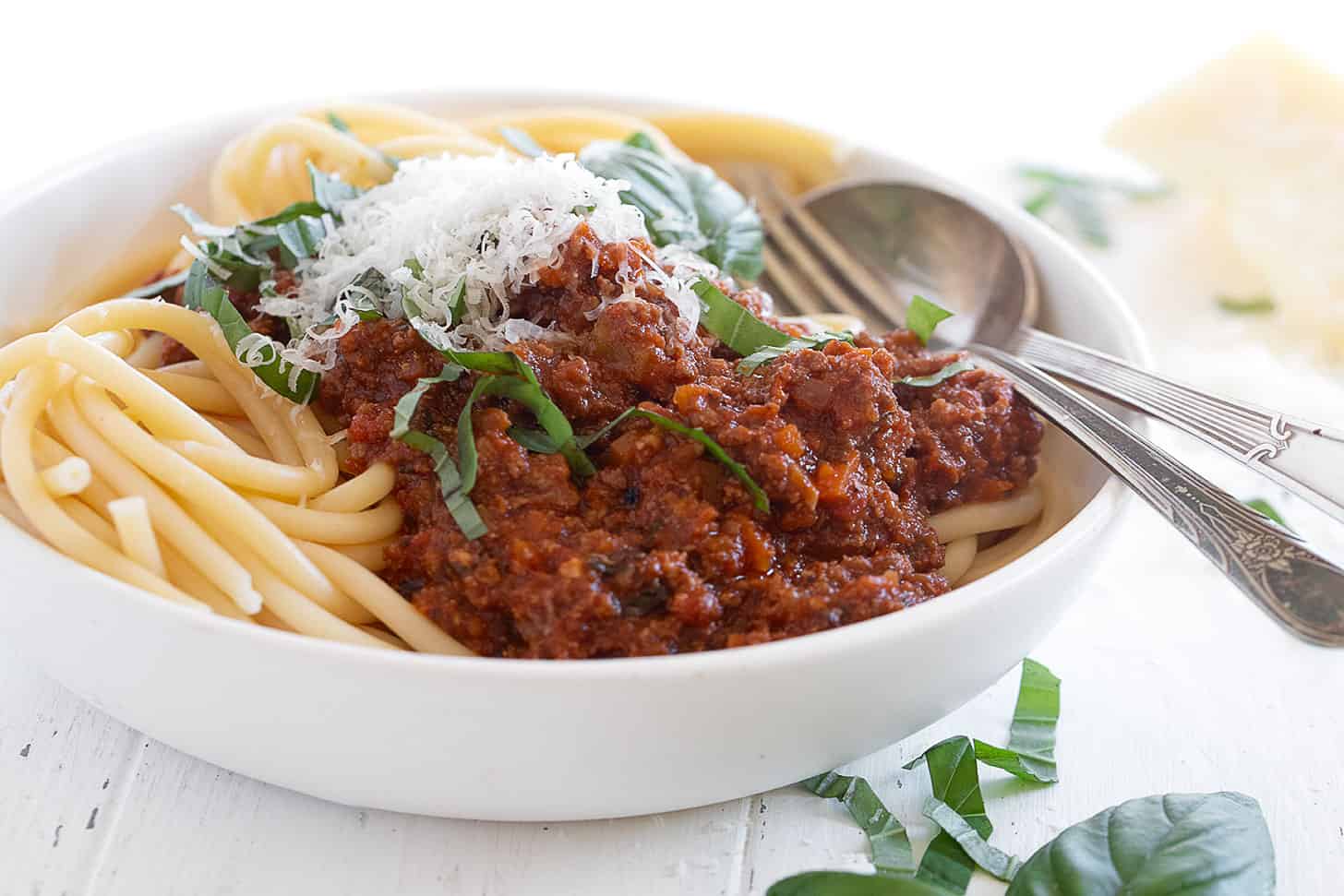
This classic Italian meat sauce is perfect to top spaghetti or other pasta, or to use as a sturdy meat sauce for lasagna or to stuff manicotti. It’s a traditional, long‑simmering Italian meat sauce, flavoured with red wine, lots of garlic, carrot, onion and herbs, then finished with a bit of butter and a touch of cream for a rich, velvety sauce that clings beautifully to pasta.
- Classic Italian meat sauce recipe: at a glance
- Ingredients and substitutions
- How to make classic Italian meat sauce: step-by-step photos
- Recipe tips!
- Classic Italian meat sauce FAQ
- How to serve Italian meat sauce
- Storing and freezing Italian meat sauce
- Get the Recipe: Classic Italian Meat Sauce
- More Italian recipes to love!
Ingredients and substitutions
This is one of those recipes that benefits from having all the ingredients prepped and at the ready, so they’re easy to grab and add to the pot. It makes for a much more pleasant cooking experience, in my opinion. Here are the ingredients assembled and ready to cook.
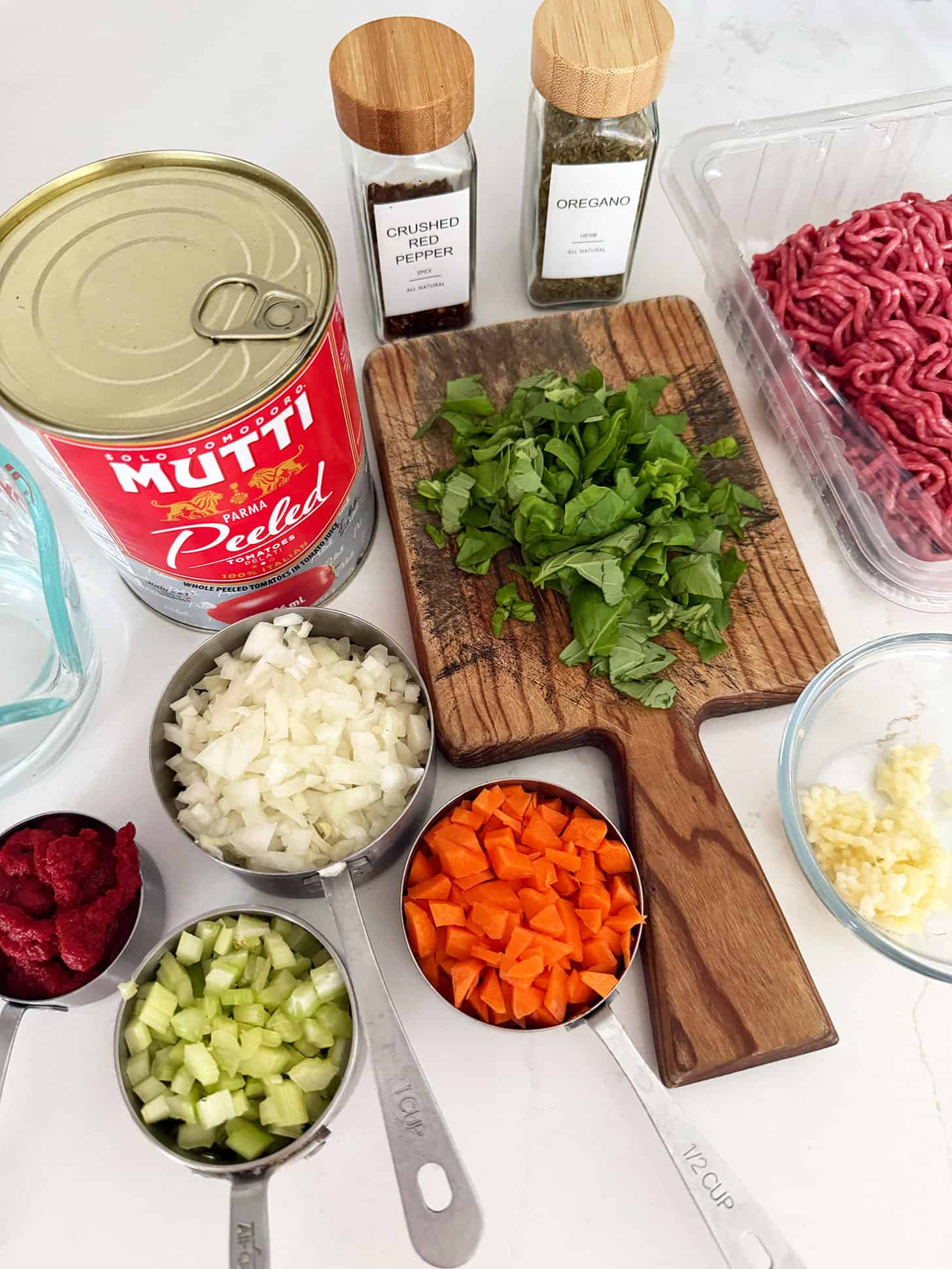
A few notes about the key ingredients …
Ground beef: You can use whatever fat content of ground beef you like here. You’ll note that in the recipe, most of the fat will be spooned off after browning anyway. If you like, you can use a mix of ground beef and ground pork here, or use a classic mix of ground beef, pork and veal.
Red pepper flakes: If you like a touch of “warmth” in your sauce, add a pinch of red pepper flakes with your garlic, adjusting the amount to taste. I find a pinch is about all I need, unless I’m aiming for a particularly spicy sauce, for some reason.
Canned tomatoes: I prefer to use whole canned tomatoes for this sauce, but you could use canned diced tomatoes or even crushed tomatoes if that’s what you have on hand.
Tomato paste: There isn’t a lot of tomato paste in the sauce, but it does play an important role in the rich tomato taste of the finished sauce. I find the tubes of tomato paste handy for these small amounts, so I don’t have to open up a can and then deal with the leftovers.
Garlic: You can’t beat fresh garlic in pasta sauces like this, so that would be recommended. Adjust the amount of garlic to your taste (or your family’s).
Tip! You don’t always have to mince garlic. Thinly sliced garlic is less likely to scorch and introduce a bitter flavour.
Red wine: The red wine adds both great flavour and a bit of acidity to the sauce. Chianti, Sangiovese, or Barbera. Cabernet Sauvignon or Merlot would also work well. Opt for a wine you enjoy drinking, so you’ll enjoy the flavour in this meat sauce.
If you don’t have or want to use red wine, add a Tablespoon or two of red wine vinegar to deglaze the pan instead of the wine, then immediately add an extra cup of water to the sauce to replace the liquid from the wine. Allow the water to reduce by half just like the wine.
Carrots – Be sure to cut the carrots finely, as they won’t really break down even with the long simmering time. It’s a good idea to cut the carrots a similar size to the diced onions.
How to make classic Italian meat sauce: step-by-step photos
This is a visual summary of the steps to make this recipe. Scroll down to the Recipe Card below for the complete list of ingredients and instructions.
- Brown the ground beef and remove from the pot.
- Soften the vegetables in the same pot, then add wine, tomatoes, basil and herbs.
- Simmer the sauce for 2 hours over low heat, stirring occasionally.
- Finish the sauce with a pat of butter and a bit of cream.
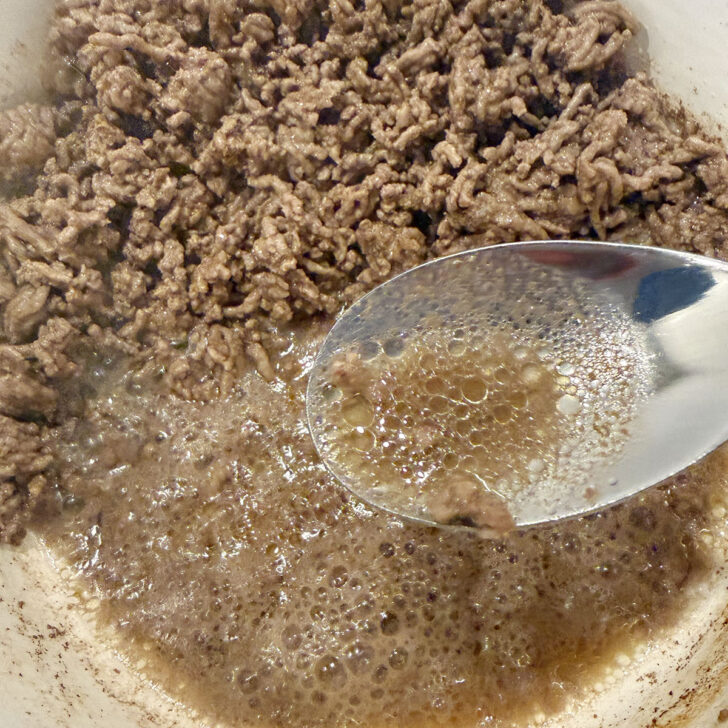
Step 1: Brown the ground beef and spoon off excess fat. Remove the beef to a bowl.
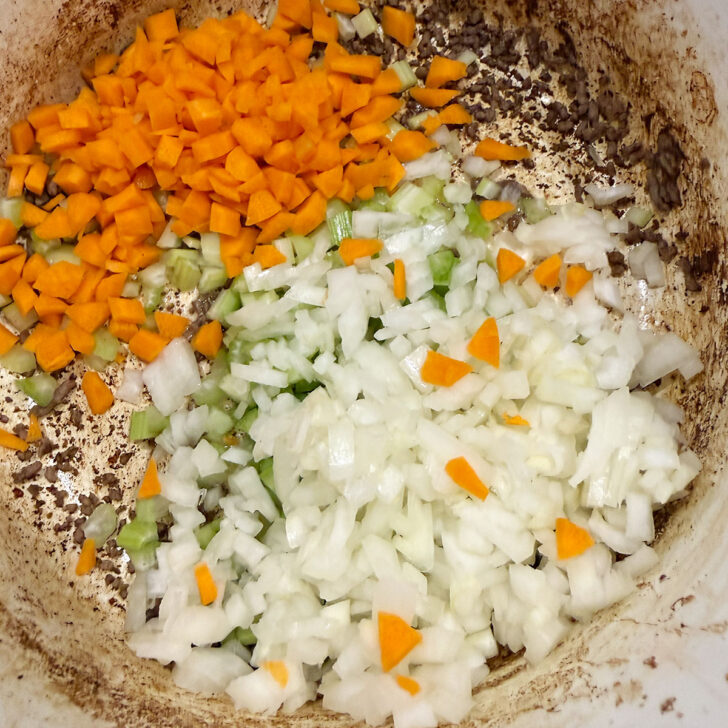
Step 2: In the same pot, add the carrots, celery and onion and cook until softened.
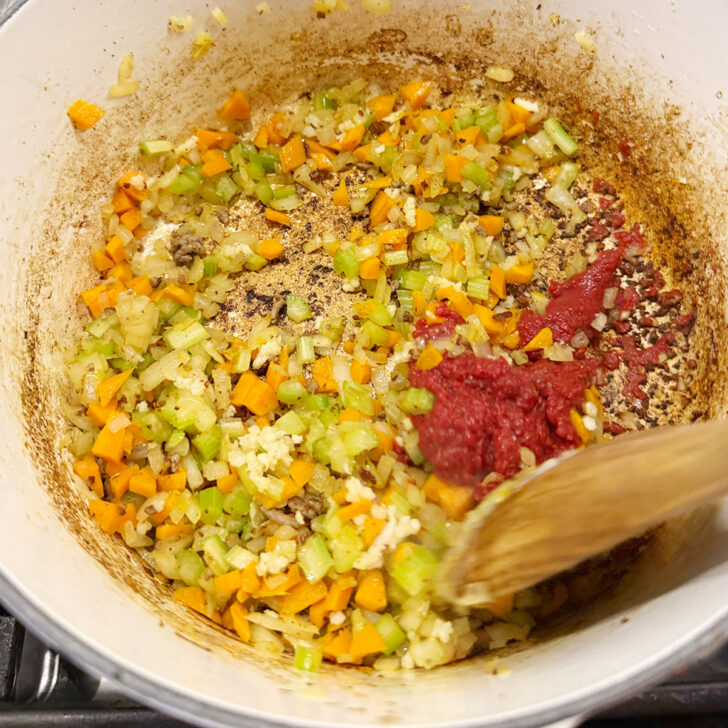
Step 3: Add the tomato paste to the pot and cook briefly with the vegetables.
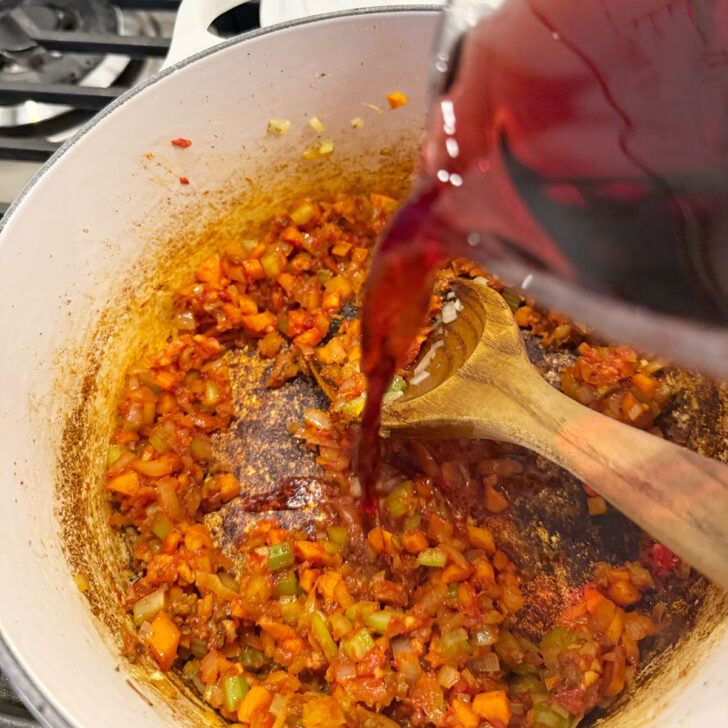
Step 4: Add the red wine to the pot.
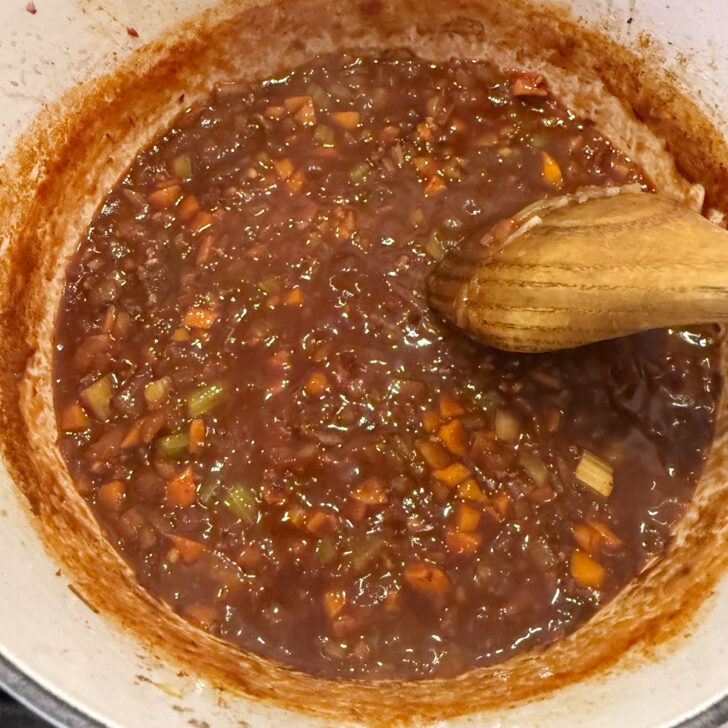
Step 5: Cook the wine with the vegetables until reduced by half.
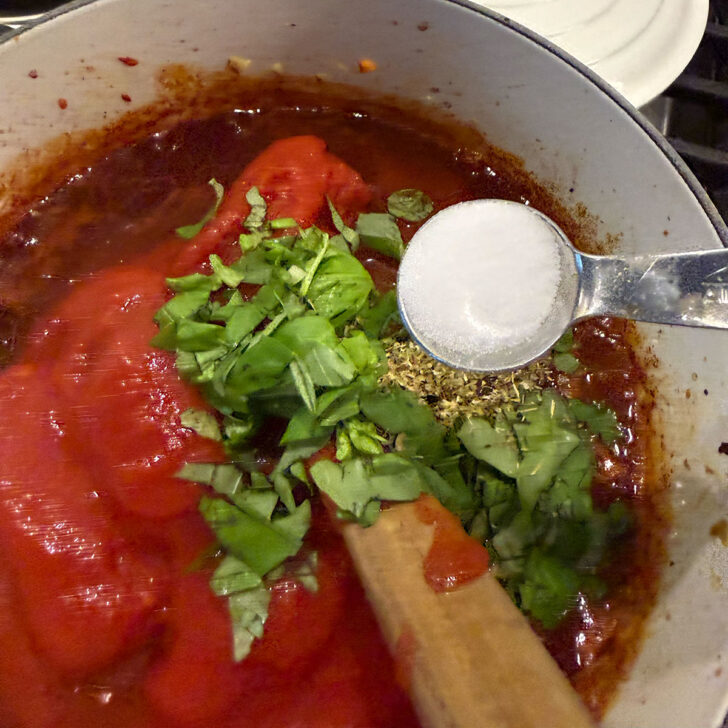
Step 6: Add the canned whole tomatoes, basil, herbs and salt to the pot and stir together.
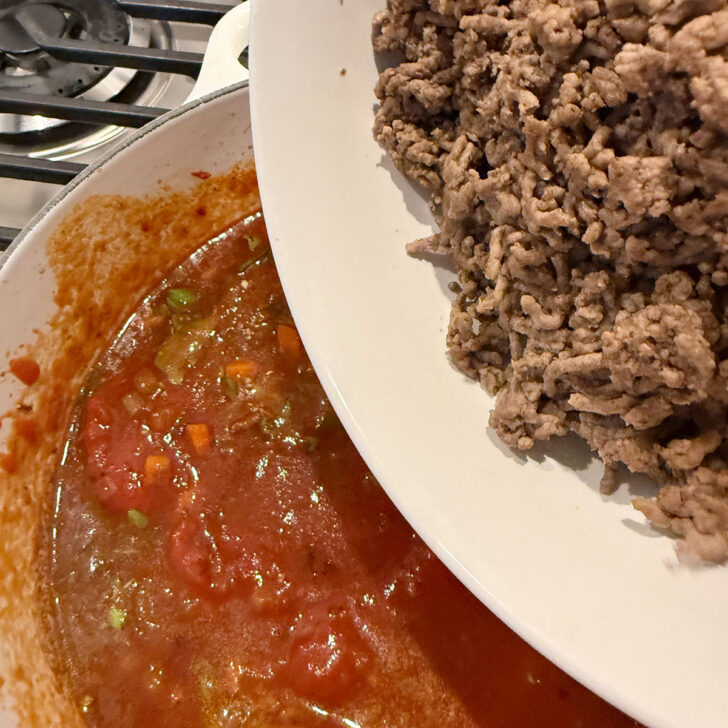
Step 7: Return the ground beef to the pot.
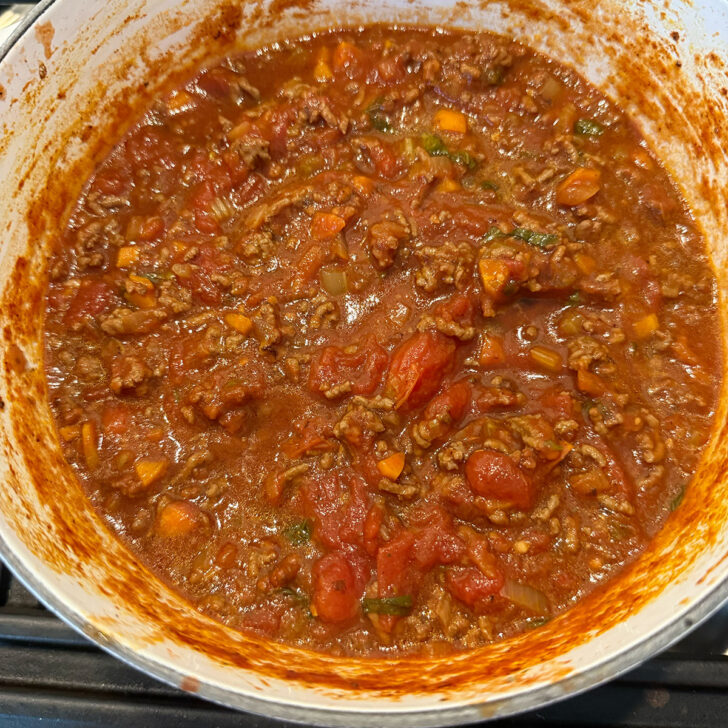
Step 8: Simmer the sauce for 2 hours over low heat.
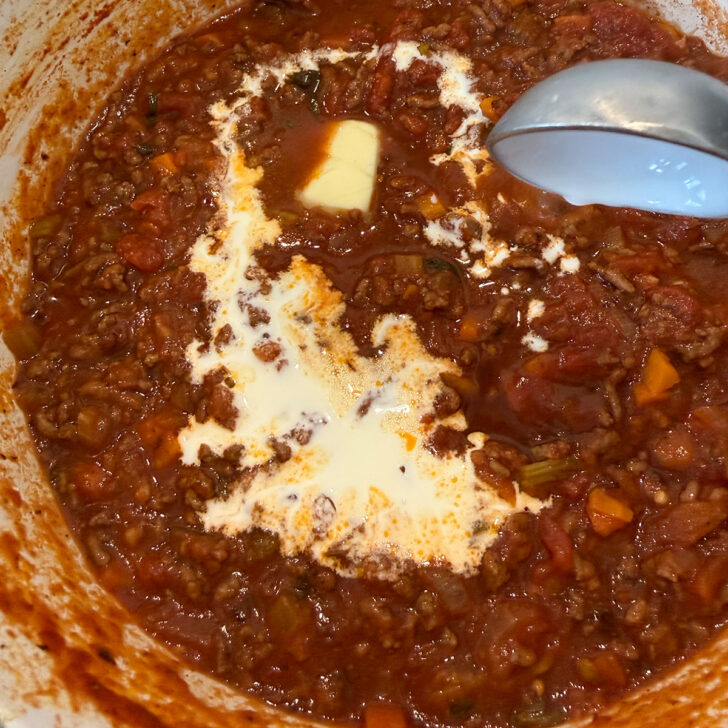
Step 9: Finish the sauce with a pat of butter and a drizzle of cream.
Recipe tips!
- Be sure to spoon off most of the fat/liquid after browning the ground beef and then continue cooking the now-dry-ish ground beef a little longer, to develop a little more flavour from extra browning of both the meat and some extra brown bits on the bottom of the pot.
- Speaking of the pot, start with your heaviest-bottom pot. As this is a long-simmering sauce, a heavy-bottomed pot will help to avoid scorching as the sauce thickens.
- Be sure to check/stir regularly towards the end of cooking, as the sauce thickens. Even with a heavy-bottomed pot, scorching is possible once the liquid level have decreased.
- If making this sauce for pasta, I stop the cooking a little earlier, so it’s a little more liquid to coat the pasta. For lasagna or manicotti etc., you can cook it down until there is not so much liquid, for a nice and sturdy meat sauce.
Classic Italian meat sauce FAQ
For the best meat sauce, use a medium-bodied red wine with high acidity and moderate tannins, such as Chianti, Sangiovese, or Barbera. Cabernet Sauvignon or Merlot would also work well. Pick a wine you enjoy drinking, so you’ll enjoy the flavour in this meat sauce.
The amount of liquid added to this sauce assumes that the sauce will be cooked uncovered and cook off. A slow cooker is a closed cooking environment, so if you were to use the same amount of liquid, you would probably end up with quite a watery sauce. You would certainly want to reduce the liquids, but as I haven’t tested it in a slow cooker, I’m not sure by how much.
Yes, you can use this meat sauce for lasagna. For lasagna, I like to cook the meat sauce just a tad longer to cook off a bit more liquid and create a nice thick sauce that will stand up well in lasagna.
No. Bolognese typically has a lot of milk and wine and is actually quite light on the tomatoes. This is an Italian tomato meat sauce (ragu‑style), heavier on tomatoes, lighter on milk.
Yes. If you don’t have or want to use red wine, add a Tablespoon or two of red wine vinegar to deglaze the pan instead of the wine, then immediately add an extra cup of water to the sauce to replace the liquid from the wine. Allow the water to reduce by half just like the wine.
Yes, you can make this meat sauce up to 3 days ahead. Reheat over low heat on the stovetop.
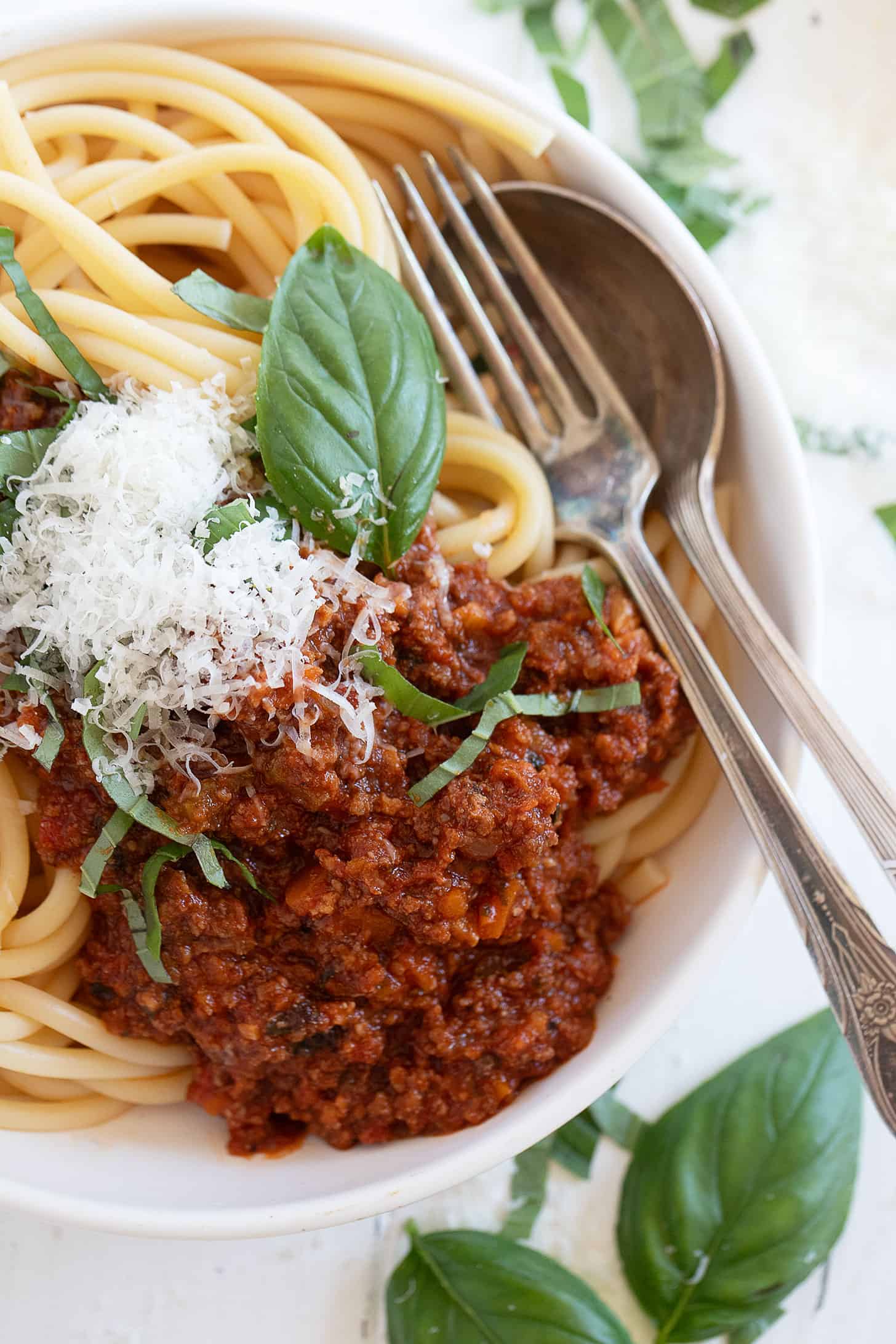
How to serve Italian meat sauce
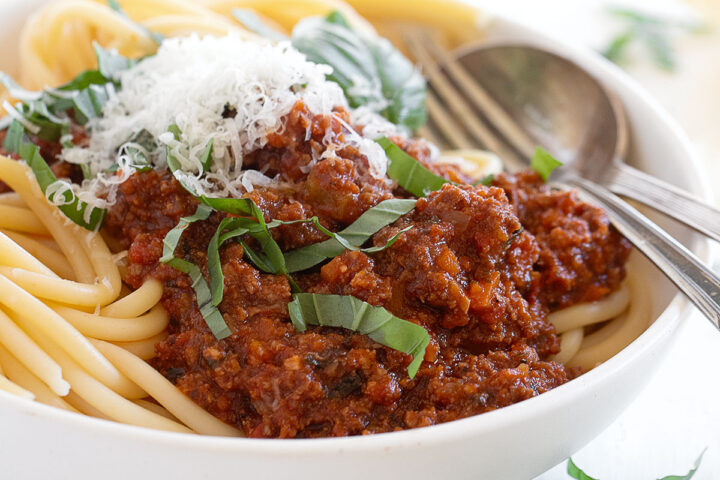
Toss the meat sauce with hot pasta in a large bowl before plating so the sauce clings better. (The photos here were plated to show off the meat sauce in the photo.) You can add another spoonful of sauce on top if you like.
The best pasta shapes for this meat sauce: spaghetti, rigatoni, pappardelle and penne are all good pasta options.
Storing and freezing Italian meat sauce
The cooked meat sauce will keep well in an airtight container in the refrigerator for up to 3 days in an airtight container.
Yes, this Italian meat sauce freezes beautifully for up to 3 months! In fact, you don’t even need to thaw it. Simply add the frozen sauce to a saucepan and heat over the lowest heat to thaw and serve. Otherwise, thaw in the refrigerator overnight before reheating on the stovetop.
Tip! Make a double batch and freeze some. As long as you have a bit enough pot to hold it all, you can use the same long-simmering time to make extra to put in the freezer. Portion it in “meal-sized” packages, so you’ll always have a quick and easy meal at the ready. Just add pasta!
Want to save this recipe?
Enter your email and I’ll send it to your inbox. Plus, you’ll get great new recipes from me every week!
By submitting this form, you consent to receive emails from Seasons and Suppers.
You can unsubscribe at any time.
Get the Recipe: Classic Italian Meat Sauce
Ingredients
- 1 lb ground beef, lean or extra lean recommended, or a mix of ground beef, pork and or/veal
- 2 Tablespoons extra virgin olive oil, divided
- 1 cup onion, diced
- 1/2 cup carrot, finely diced
- 1/2 cup celery, finely diced
- pinch red pepper flakes, optional
- 4-5 cloves garlic, thinly sliced or minced
- 1/4 cup tomato paste
- 1 cup red wine, *see Note 1 below
- 28 oz whole canned tomatoes, hand-crushed
- 1/2 cup water
- 1/2 cup basil leaves, chopped, loosely packed or 2 Tbsp dried basil leaves
- 1 teaspoon dried oregano leaves
- 1-2 Tablespoons brown sugar, to taste
- 2 teaspoons fine table salt
To finish:
- 1 – 4 Tablespoons heavy whipping cream, optional *see Note 2 below
- 1 – 2 Tablespoons butter, optional *see Note 3 below
- additional salt and freshly ground pepper, to taste
Instructions
- In a large, heavy-bottomed pot, such as a Dutch oven, heat 1 Tablespoon of the olive oil over medium heat. (A heavy-bottomed pot, such as a Dutch oven, will prevent scorching during the long simmering time.) Add the ground beef and cook over medium heat, stirring as necessary, until no longer pink.
- Remove the pot from the heat briefly and, using an oven mitt, tilt the pan slightly. Move the beef to the top end of the pot to allow the fat in the pan to flow to the low end. Use a spoon to spoon off most of the fat/liquid in the pot and discard. Return the pot with the ground beef to the heat and continue cooking the ground beef a few more minutes, stirring, to brown nicely. Remove the ground beef to a bowl and set aside.
- Add the remaining 1 Tablespoon of olive oil to the same pot and heat over medium heat. Add the 1 cup onion (diced), 1/2 cup carrot (finely diced) and 1/2 cup celery (finely diced) to the pot and cook, stirring regularly, until the onion is softened, about 4-5 minutes. Add the pinch red pepper flakes (optional) (if using) and the 4-5 cloves garlic (thinly sliced or minced) and cook, stirring, about 1 minute (don't let the garlic scorch). Add the 1/4 cup tomato paste to the pot and cook, stirring, for another minute. Add the 1 cup red wine (*see Note 1 below), stir in, then allow to cook/simmer for about 2 minutes, or until reduced by about half. Add the 28 oz whole canned tomatoes (hand-crushed), 1/2 cup water, 1/2 cup basil leaves (chopped, loosely packed or 2 Tbsp dried basil leaves), 1 teaspoon dried oregano leaves, 1-2 Tablespoons brown sugar (to taste) and 2 teaspoons fine table salt. Stir well to combine, breaking up the whole tomatoes with the spoon. Return the cooked ground beef to the pot.
- Bring the sauce to a boil, then reduce the heat to low (or a tad higher if necessary to produce a very gentle simmer) and simmer the sauce for about 2 hours, stirring regularly and more frequently as the mixture starts to thicken toward the end of cooking. (It's important to watch the sauce closely and stir often as the sauce thickens, as the sauce/meat can scorch if it sits on the bottom of the pan too long.) Cook sauce until desired thickness is reached. For pasta, I like to leave it a touch thinner. For lasagna or other baked pasta, you can cook until most of the liquid has cooked off.
- Add the heavy cream (if using) a Tablespoon at a time and stir into the sauce until it reaches your desired level of creaminess. Add the butter to the sauce and stir vigorously with the sauce until the butter is completely melted. Taste the sauce and add additional salt and/or freshly ground pepper, as needed, to your taste. (If the flavours taste a little bit flat, a bit more salt is usually the solution!)
- To serve this meat sauce with pasta, I like to combine the sauce and the cooked pasta in a large bowl and toss well, then I use tongs to transfer to serving plates or a bowl. You can add another spoonful of sauce on top if you like.
- Use sauce immediately or cool a bit, then refrigerate for up to 3 days or freeze for up to 3 months.
Notes
More Italian recipes to love!
Hi! I’m Jennifer, a home cook schooled by trial and error and almost 40 years of getting dinner on the table! I love to share my favourite recipes, both old and new, together with lots of tips and tricks to hopefully help make your home cooking enjoyable, stress-free, rewarding and of course, delicious!


I will never admit this but this is better than my mother’s and close to my straight off the boat grandmother bless her soul.
So glad you enjoyed it, Devin :) Thanks so much!
Great recipe but we liked it without butter or heavy cream.
Glad you’re enjoying it, Alex. Thanks!
Well worth the effort. Best meat sauce I’ve ever made. 😋
So glad to hear, Faith :) Thanks so much!
Hi Jennifer what would Heavy cream be? I only see whipping cream, half and half and coffee cream in the grocery store here. What would you suggest of these for the cream?
Thanks I always love your recipes
Hi Roxanne, heavy cream is just another name for whipping cream, so grab the whipping cream :)
This is my go to pasta meat sauce – easy and delicious – thanks again for another great recipe Jennifer.
I’m so glad you’re enjoying it, Nick :) Thanks so much!
This recipe is very close to what I’ve been making for years, incuding small meatballs.The last 10 minutes I added grated carrots and zucchini ( for kids that didn’t like vegies) which I still do. No cream.Thank you for a great recipe!
Thanks Lieske!
I MAKE A DOUBLE BATCH EVERY 3-4 WEEKS.
TERRIFIC!
So pleased you are enjoying it, Gordon! Thanks so much :)
Excellent! Both my husband and I loved this recipe. It had the flavor and punch we look for. Will make this one again.
So pleased you both enjoyed it, Dianne :) Thanks so much!
Hi Thank you for the recipe, this is exactly how my mom did it in my Italian house when we were growing up but without the heavy cream and butter . I love it it tastes great ! Thank you for sharing!!!
Thanks so much, Christine. So glad you enjoyed it!
Can I leave out the cream?
Hi Joseph and yes, you can certainly leave it out (and it will still be delicious).
Love this recipe but am wondering, why cook the meat by itself and remove it? Why not cook it with the vegetables? I have never seen this in another recipe.
Hi Meredith, cooking the meat first allows it to brown well and browned equals flavour. If it were cooked with the vegetables, the water from the vegetables would not allow the meat to brown well.
Is there a variation that allows for using flank steak pieces instead of ground meat?
Hi Shiloh, I have a Classic Beef Ragu recipe that might be what you’re looking for. You can find it here – https://www.seasonsandsuppers.ca/beef-ragu/
What can I sub for wine?
Hi Gail, I think I would use 1/2 cup water with 1/2 cup beef broth and maybe a teaspoon or so of red wine vinegar.
FANTASTIC SAUCE! I made this for guests after a trip to Italy where I dreamed of the meat sauce I had in Florence all the way home on the plane. This recipe delivers! The only change I made was to cut the brown sugar in half. SOOOOO GOOOD!
I’m so glad to hear, Diane! Thanks so much :)
Doubled this recipe today using ground beef/pork combined and it is DELICIOUS. Only change I made was to use beef broth instead of water, and I didn’t double the quantity of brown sugar. I loved the idea of giving the sauce a quick hit with the immersion blender; not to hide the carrots in my case but just to give the sauce a lovely even consistency. It is rich and flavorful with just a hint of sweet in the background. Will definitely make again! Tastes so good today and I know it will be even better tomorrow! Thanks for the recipe!
So glad you enjoyed it, Leslie :) Thanks so much!